Introduction
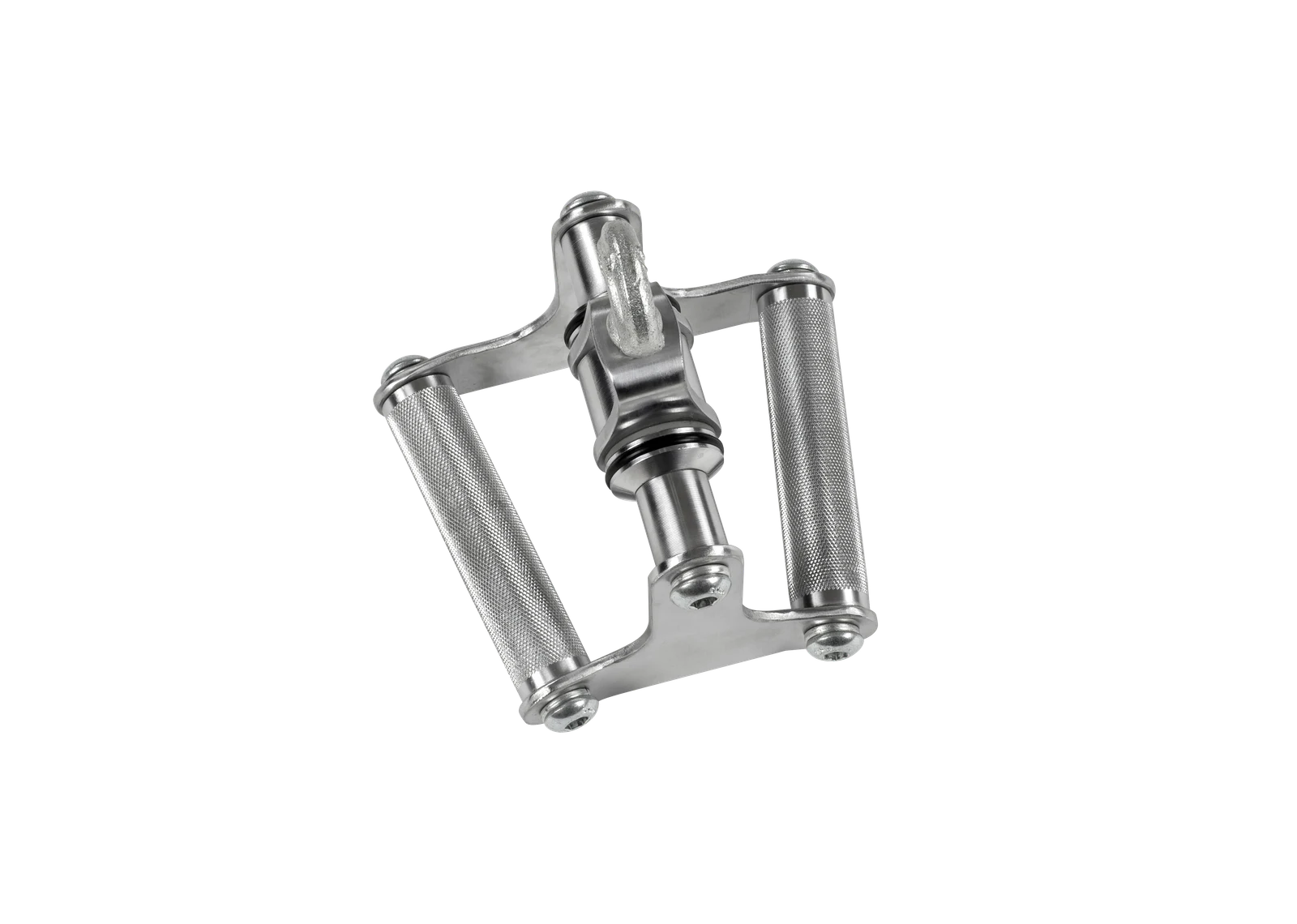
Cable attachments are small compared with racks, benches or larger strength machines, yet they can determine whether a cable station is practical for the intended programme. A missing or unsuitable handle can interrupt coaching, make product selection difficult for users or create unnecessary clutter around the equipment. For a commercial buyer, the category should be planned as a working set rather than an assortment of visually similar accessories.
This guide explains how gyms, studios, distributors and project buyers can choose commercial cable attachments around intended movements, selected equipment, user access, storage and order preparation. Product-specific connection details, dimensions, materials, packing and availability must be confirmed against the selected attachment and machine.
Start with the exercises and users
An attachment should have a clear role in the training programme. List the movements the facility or customer expects to support, who will perform them and whether the space is open access or coached. Then identify the attachments required for those movements. This avoids buying a large miscellaneous group that staff do not use or cannot store clearly.
General-access facilities
In an open gym, a compact and understandable set is often more useful than every available attachment. Users should be able to find the required handle, return it after use and avoid leaving it on the floor. Consider the number of cable stations, the expected user traffic and where accessories will wait between sets.
Coached studios and personal training
Coached environments may require particular handle formats for planned sessions or individual needs. Build the list around the programme and instructor workflow. Confirm which products will be kept at each station and which will be shared from a central storage point. Clear organisation can reduce set-up time and make a busy session easier to supervise.
Distributor sourcing
For a distributor range, group attachments by their intended application and product reference. Customers should be able to see which attachments relate to cable machines, which need further compatibility review and what product information is available. Avoid a broad promise that every attachment fits every machine; compatibility should be confirmed for the actual selected combination.
Confirm compatibility before an order is released
Compatibility is a product-specific question. A photograph that shows an attachment connected to one unit is not proof that it connects to every cable station. Share the attachment code, selected machine information and intended application in the enquiry. Ask for confirmation of the relevant connection arrangement and any information that should be considered before ordering.
Keep the machine reference in the enquiry
The clearest request identifies both sides of the selection: the attachment and the machine or product group it is intended to accompany. If the buyer is sourcing cable machines from another provider, include the available connection information and images. If that information is incomplete, state that compatibility is pending rather than asking a supplier to guarantee a fit without evidence.
Do not confuse visible similarity with interchangeability
Many handles or bars look alike in a catalogue. Their connection, overall format, intended use, storage need or packing may differ. Put the selected product reference and required quantity into the order schedule. This helps prevent a substitution based only on appearance.
> Need a cable-attachment shortlist? Send OKTOP your selected cable equipment, required movements, approximate quantity and destination market. We can help organise the questions that need product-specific confirmation.
Plan access, storage and housekeeping
The best attachment set can still be difficult to use if it has no home. Map where users collect and return accessories and check that the storage position does not conflict with cable travel, active exercise space, entrances or cleaning routes.
Place attachments near the intended station
Near-station storage can reduce unnecessary movement, but it must not narrow the active training zone. For shared accessories, a central storage point may be better. The right choice depends on the layout, programme and user traffic. Review final product dimensions and site conditions before installation.
Make product identification easy
Users and staff should be able to distinguish attachments without searching through a mixed bin. Use a consistent storage arrangement and, where appropriate, a clear local labelling system. Confirm any product marking or branding detail against the selected item; do not infer it from a generic image.
Include the complete accessory workflow
Think through the sequence: a user arrives at a station, selects an attachment, changes it when appropriate, returns it and clears the area for the next user. A layout that supports this sequence is more useful than one that simply displays accessories attractively.
Make the cable-attachment request quote-ready
Your enquiry should include facility or customer type, intended exercise or programme, selected attachment codes or reference images, quantities, associated machine information, storage requirements, destination market and any packaging, branding or documentation request. A buyer can also state which points remain open and request relevant options rather than issuing an incomplete final specification.
Ask for clear commercial scope
For each selected item, ask what is included, whether it is a standard or optional selection for the relevant product context, and what packing information is available. If the attachment is part of a mixed equipment order, request that the packing list allows the receiving team to identify the accessory group and its associated equipment where practical.
Agree factory and shipment checks that matter
Inspection should be connected to the final list. Depending on the order, a practical review may cover product code, visible configuration, selected quantity, representative packing, carton identification and packing-list alignment. If a buyer requests factory testing or a pre-shipment review, define the actual check for the relevant products. Supplier evidence is helpful when tied to an order, but it is not a substitute for independent inspection or local compliance verification where these are required.
Keep the receiving team in the loop
Small accessories are easy to overlook when a project includes larger machines and racks. Before delivery, make sure the receiving contact has the product schedule, packing list and a way to record a visible discrepancy. Keep the attachment group together during installation so that an accessory is not separated from the station it is intended to support.
Common buying mistakes
Buying an assortment without a programme
An unstructured assortment can become unused inventory. Start with the training application, selected machines and the user workflow.
Assuming compatibility
Request confirmation against the actual attachment and selected machine. Do not rely on a generic statement or a similar-looking image.
Leaving storage until after delivery
Accessories left on the floor create poor housekeeping and can block access. Include their storage position in the original floor-plan and product discussion.
FAQ
What should a commercial cable-attachment enquiry include?
Include the intended application, attachment references or images, quantities, associated cable-machine information, facility type, storage request, destination market and any inspection or packaging requirements.
Do all cable attachments fit all cable machines?
No. Compatibility must be confirmed for the selected attachment and machine. Provide the relevant model information and mark unknown details as pending.
Why should attachments be included in shipment inspection?
Accessories can be smaller and separately packed, so checking their product reference, quantity, package identification and packing-list alignment helps the receiving team account for the complete order.
Conclusion
Commercial cable attachments should be selected as part of the cable-station workflow. Define the movements and users, confirm the selected machine relationship, plan accessible storage and document the product list before shipment. That approach makes the training area easier to operate and gives purchasing and receiving teams a clearer reference.
Building a cable-equipment order? Explore OKTOP cable attachments or send your requirements with the selected equipment, quantities and destination market.