Introduction
Commercial kettlebells are often bought as a simple list of weights. In practice, they affect how a training area is programmed, how quickly coaches can move a class, how users identify the next option and how the facility resets after a session. For a distributor, the same category also needs to be easy to explain, quote and replenish. That is why a sensible kettlebell decision begins with the training application and the product range rather than a single catalogue picture.
This guide helps commercial gyms, studios, project buyers and distributors prepare a clearer kettlebell enquiry. It focuses on selection, storage, inspection and delivery preparation. Product-specific weight options, dimensions, materials, finishes, packing and availability should be confirmed against the relevant model and order.
Define the programme before selecting the range
Kettlebells can support carries, hinges, presses, squats, rows and coach-led conditioning. The useful question is not whether a kettlebell is versatile; it is how the facility expects to use it. A strength area, a group-training studio, a hotel gym and a distributor catalogue may all need different progressions, quantities and storage arrangements.
General-access commercial gyms
In a busy member gym, users may need to select different loads quickly and return them safely. Build the range around the expected mix of beginner, regular and experienced users, then consider whether the number of kettlebells at each selected weight supports peak use. Storage location and clear identification are as important as the individual products because users should not need to carry equipment across a congested room.
Coached studios and functional sessions
For coached sessions, consider the class format, class size and how many participants may need the same or similar load at once. A well-planned set makes it easier for the coach to cue an exercise and for participants to select, return and exchange equipment without interrupting the session. Include the reset process in the layout: where will the kettlebells be stored between rounds, and will that position block a route or another training station?
Distributor product ranges
Distributors need a category that can be presented consistently to different customer types. Define the target buyer, the intended commercial use and the supporting items that make the category sellable, such as storage or complementary free-weight equipment. A broad range is not automatically a better range if the product options are hard to identify or cannot be quoted with a clear model reference.
Plan progression and quantity as a system
A commercial kettlebell order should describe more than a total quantity. Create a schedule showing each selected product code or model reference, the chosen weight option, quantity and any identification or storage requirement. This gives purchasing, factory, inspection and receiving teams a shared reference.
Build a progression around actual users
The ideal progression depends on programme design and users. Instead of copying another facility’s list, consider who will train, which movements will be coached, whether several people train at once and how much staff support is available. A facility that introduces kettlebell work to general members may require a different spread from a coached performance area. If the buyer is unsure, share the facility brief and seek a product discussion before finalising the order.
Avoid gaps created by product-only purchasing
One attractive model or promotional image can distract from the operating system around it. Check whether the selected range provides a practical path between intended options, whether a class may need duplicates, and whether a storage solution is compatible with the final selection. Do not infer compatibility from a photograph; confirm it with the selected product information.
> Planning a kettlebell range? Send OKTOP your facility type, intended application, approximate quantity and destination market. We can help organise the product questions for a clearer enquiry.
Review handling, identification and storage together
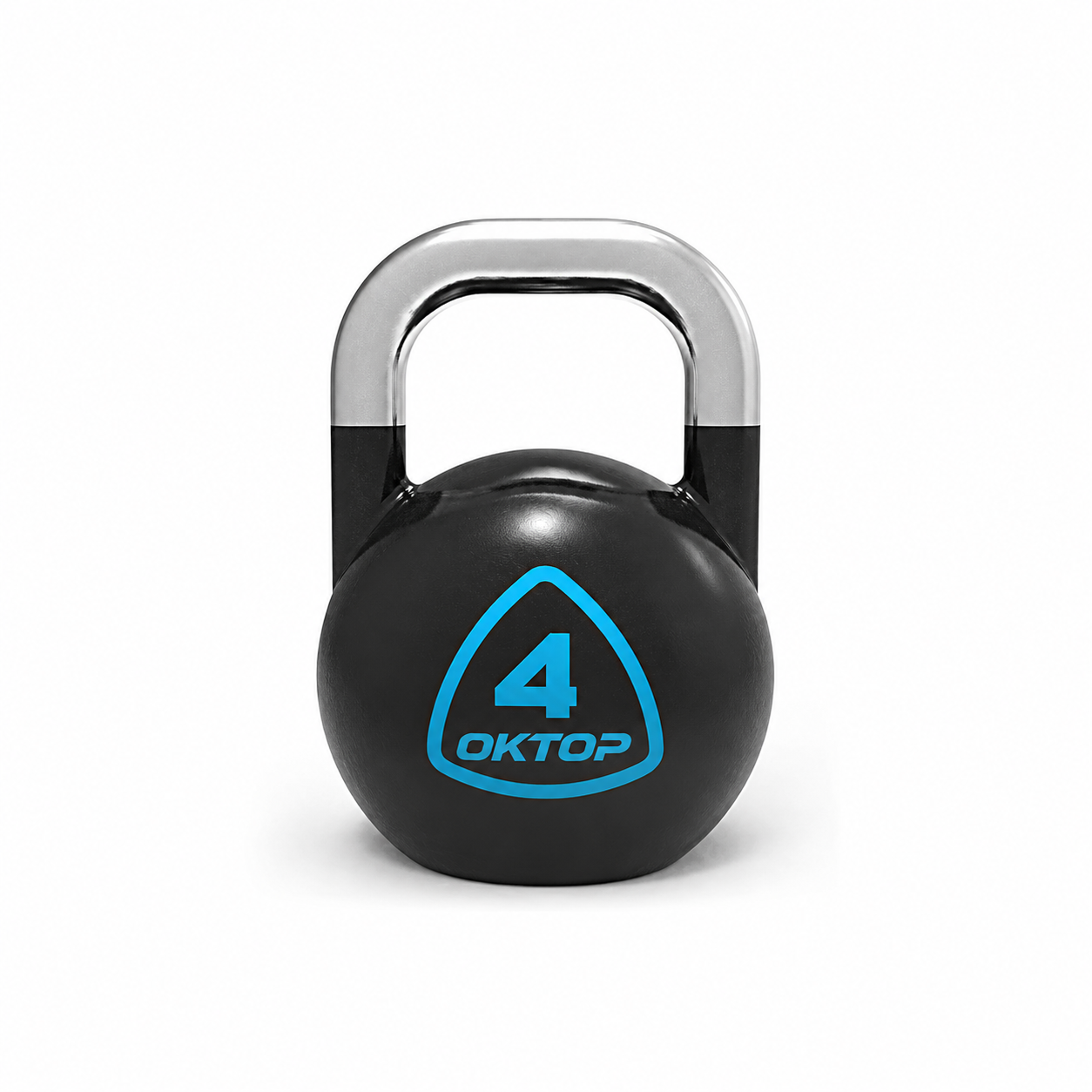
The way a kettlebell feels and is identified affects day-to-day use. For a real commercial selection, ask for current images and product information for the exact model. Review the handle presentation, surface finish, visible weight marking and overall format in relation to the intended users and training environment. Avoid making material or performance assumptions from a generic category name.
Product identification matters in shared spaces
Users and staff should be able to identify the selected option without extended searching. Confirm how the chosen products are marked and how the range will be arranged at the site. If the facility uses several free-weight formats, clear storage zones can reduce confusion between kettlebells, dumbbells, plates and accessories.
Storage is not an accessory decision
Storage affects access, housekeeping, cleaning and traffic flow. Place it close enough to the planned kettlebell activity that users can reset equipment, but outside an active lifting area and clear route. Check the floor plan, storage dimensions and site conditions using information for the exact products. A rack or storage unit should be considered as part of the same purchase discussion, not an afterthought after delivery.
Check the room, not just the equipment footprint
Kettlebell work involves movement around the product. The active area may include a carry lane, a coach position or space for several users. Before confirming quantities, review circulation, adjacent benches or racks, floor condition, ceiling constraints where relevant and the route used to move equipment from storage to the training position. Local safety and building requirements should be assessed by the responsible qualified parties.
Prepare an enquiry that can be quoted accurately
A concise commercial enquiry can prevent later confusion. Include the facility or customer type, intended training application, selected products or reference images, quantity by option, storage needs, destination market and any branding, packaging or documentation request. If the final weights or model are undecided, mark them as pending and request suitable options rather than treating a provisional list as an order.
Ask for order-specific confirmation
For the selected products, ask what information can be confirmed: product code, current image, selected option, quantity, visible marking, representative packing, package count and available storage information. When a buyer needs factory testing or pre-shipment inspection, agree the points to be checked before production is completed or goods are loaded.
“Factory testing” should be specific. Depending on the product and order, it may be a configuration review, count check, visible finish review or packing confirmation. It should not be described as independent certification or as proof of every destination-market requirement unless that is actually documented for the selected item.
Plan shipment and receiving
Kettlebells may be part of a mixed order with racks, benches or other free-weight products. The receiving team benefits from a packing list that can be matched to the product schedule. Ask for carton or package identification information where available, plan the unloading route and agree who records a visible discrepancy. Keep current order references with the project file rather than relying on an earlier catalogue image.
Common buying mistakes
Selecting by price without a user brief
Price comparison is only useful when suppliers are quoting an identifiable product and range. A lower figure may refer to a different model, option, packing arrangement or scope. Start with the application and product reference, then compare like for like.
Treating storage as a later project
Loose equipment can make a training area difficult to use even when the product selection is sound. Include storage, circulation and return locations in the first layout review.
Asking for a universal suitability claim
Kettlebell suitability depends on user ability, programming, supervision and site conditions. Request product information for the selected model and use qualified local advice for facility safety questions rather than asking for a generic assurance.
FAQ
What should a commercial kettlebell enquiry include?
Include the intended use, facility or customer type, selected product code or reference, quantities by option, storage requirements, destination market and any branding, packaging or inspection request.
How do I choose a kettlebell weight range for a gym?
Start with the user profile, programme and peak-session demand. Build a documented schedule of selected options and quantities, then confirm the actual product range and availability for the relevant enquiry.
Should kettlebell storage be purchased with the equipment?
Usually it should be planned at the same time. Storage affects access, user flow, floor layout and how the equipment is returned after training. Confirm product compatibility and site dimensions before ordering.
Conclusion
Commercial kettlebells work best as part of a planned free-weight system. Define the users and programme, document the progression and quantity, connect the selection to storage and user flow, and keep the purchase tied to current product references. That gives the buyer a more useful range and a clearer record for quotation, inspection and receiving.
Need a commercial kettlebell shortlist? Explore OKTOP kettlebells or send your requirements with your application, approximate quantity and destination market.