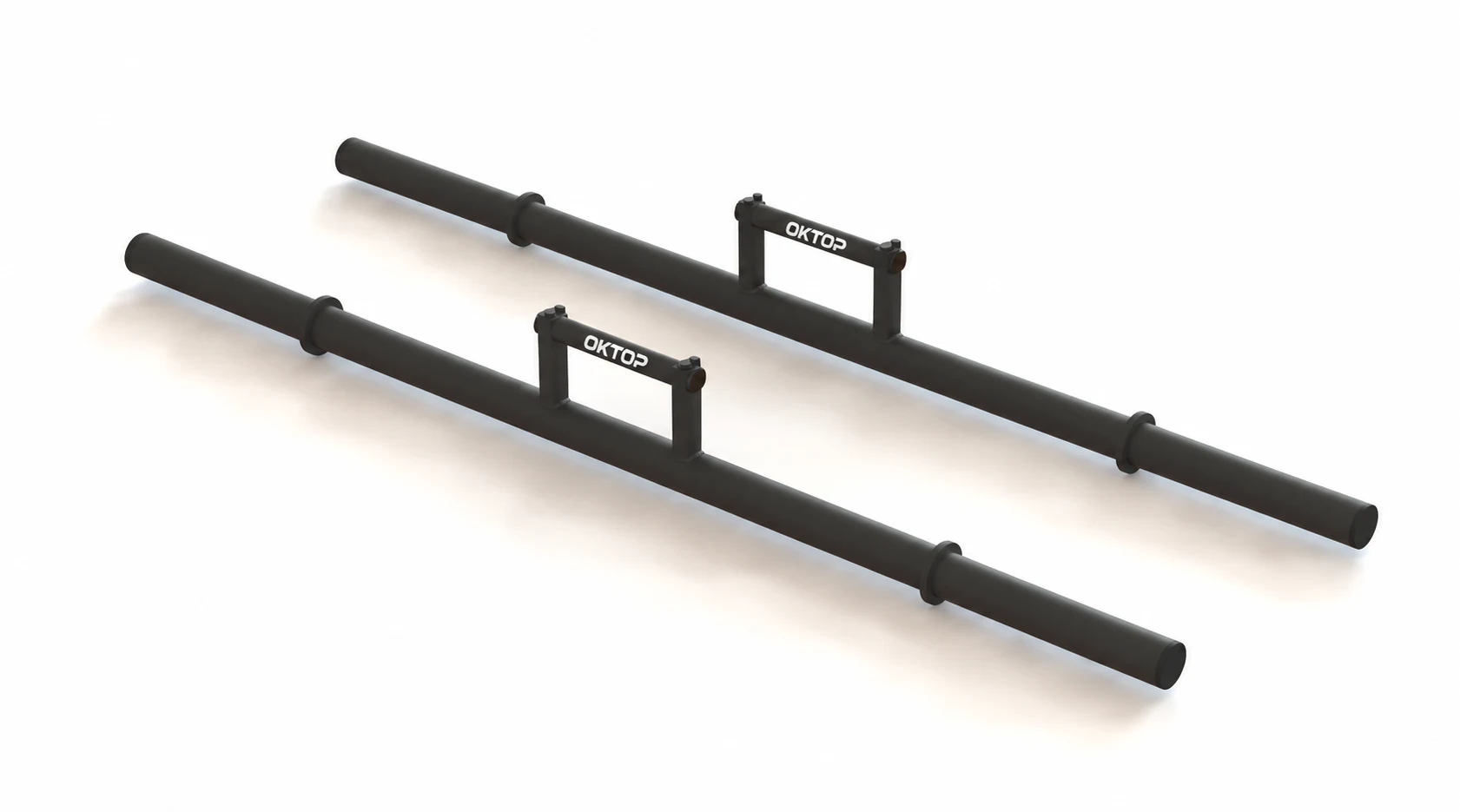
Specify farmer-carry handles as their own product code
Farmer-carry handles used in a commercial strength area should be specified as a product reference, not as a generic “carry bar” or as an afterthought on a barbell order. Project buyers planning a loaded-carry station, clubs adding specialty bars to a strength floor, and distributors extending a barbell range need a code they can repeat on the enquiry, the quotation and the receiving record.
OKTOP currently lists OT1045 Farmer Carry Handles in its Barbells category. The catalogue describes the item as a commercial barbell for lifting platforms, strength areas and distributor ranges, and presents it as a starting point for commercial sourcing. That wording identifies the format under review. It does not confirm handle length, grip diameter, loading sleeve details, finish, supplied quantity per set, working load, dimensions or a user limit. The product page asks the buyer to confirm product-specific information, configuration, branding, packaging and delivery preparation against the enquiry, and to share the intended application, approximate quantity and destination market.
Related specialty bars should stay on their own lines. OT1028 Hex Bar is a separate barbell reference and is covered in its own buyer guide. Other items in the barbells category, including trap bars and log bars, are not substitutes for OT1045. A standard Olympic lifting bar, a multi-grip bar or a sled also belongs on its own brief. This page prepares an enquiry around commercial farmer-carry handles, with OT1045 as the reference under review.
Turn the carry-station brief into an enquiry checklist
Write the commercial context before asking for a quotation. A club adding one carry station, a new strength area that will also hold other specialty bars, and a distributor assessing a specialty-bar range will not need the same quantity or packing plan. The brief should make that context obvious.
Record:
- the product code and catalogue name under review, starting with OT1045 if that is the intended item;
- any other specialty-bar codes that were considered and then set aside, including OT1028, so they are not quoted by mistake;
- the intended commercial setting and programme, such as a lifting platform, a strength area, a conditioning lane or a distributor range;
- the approximate quantity and whether the handles are for one site or several;
- the destination market and any receiving, floor or storage constraint already known; and
- the configuration, site and documentation questions that must be answered before the order is approved.
If plates, collars, drop pads or a designated carry lane are part of the same project, list them separately. The OT1045 listing does not confirm which plates or accessories are used with the handles, and those items should not be assumed from the category name “Barbells.”
Ask for station and product details in writing
Farmer-carry implements can differ in length, handle height, loading arrangement and how a pair is packed or identified. A catalogue photograph is not confirmation of the quoted item. Before comparing offers, ask the supplier to name the exact reference being quoted and to state which description, configuration, quantity and documents apply to it. A drawing or packing note prepared for a hex bar or another specialty bar should not be filed against OT1045.
Depending on the project, the buyer may need the current product description, available configuration, applicable instructions, packing information and any dimension or clearance note the supplier can provide. If a test, a label requirement or a destination-market document is required, write it into the enquiry. Do not assume those items are included because the catalogue places the handles in the barbells range or mentions lifting platforms. Ask how those words apply to the item being quoted.
Floor surface, circulation around the carry path, plate storage and delivery access should be reviewed by the people responsible for the project, using the confirmed product information. This guide does not set an installation method, a working load or a user limit for OT1045.
Use a sample or document check to protect the specialty-bar code
Where a sample or a detailed document review is appropriate, compare it with the written brief. Check that the reference, visible configuration and supplied components match the item being considered. Record any requested change and keep the approved version with the purchase file. If the reviewed item is a hex bar, a trap bar, a log bar or another specialty bar, say so in the file rather than treating the review as approval of OT1045.
Before shipment, agree a practical check for product identity, quantity, labels and packing against the confirmed order. Specialty bars in a mixed shipment are easy to confuse, so the receiving record should keep OT1045 on its own line. If independent inspection or a named document is required, agree the method and the evidence in advance. The check is specific to the order and does not replace a local review of floor or lane space.
Keep quotations and receiving on the same handle reference
Ask suppliers to quote the same confirmed reference and the same quantity. Separate the handles from plates, collars, other specialty bars, labels, packing, shipping terms and destination requirements. An earlier quotation is not evidence that the current configuration, availability or commercial terms are unchanged. If a buyer later switches from OT1045 to OT1028 or another barbell code, the quotation should be reissued against that code.
The receiving team should have the approved product schedule before the shipment arrives, and should check identity, quantity and visible packing condition while the labels are still available. Use and storage decisions stay with the qualified parties on site.
FAQ
Which OKTOP reference does this farmer-carry guide use?
This guide uses OT1045 Farmer Carry Handles as the reference under review. OT1028 and other specialty bars in the barbells category are separate catalogue items and should be quoted only if the buyer has selected them. Confirm the chosen product information against the live enquiry before ordering.
Can a buyer read handle length, load rating or packing quantity from the product name?
No. The catalogue name and overview identify farmer-carry handles as a commercial barbell-category item for lifting platforms, strength areas and distributor ranges. Length, grip, loading arrangement, dimensions, packing quantity and any stated limits have to be requested for the exact item being quoted.
What should the first commercial farmer-carry enquiry include?
Include the product code, the commercial setting, the approximate quantity, the destination market and the configuration, site or documentation points that still need written confirmation. Keep plates, hex bars and other specialty bars on separate lines if they are required.
Prepare a traceable farmer-carry enquiry
A usable enquiry names one product reference, states how the handles will be used in the strength area and lists the points that are still open. That is a clearer basis for samples, quotations and shipment preparation than a request for carry handles with no code attached.
Review OT1045 Farmer Carry Handles, browse the barbells category, read the commercial hex-bar buyer guide, or send your farmer-carry requirements.