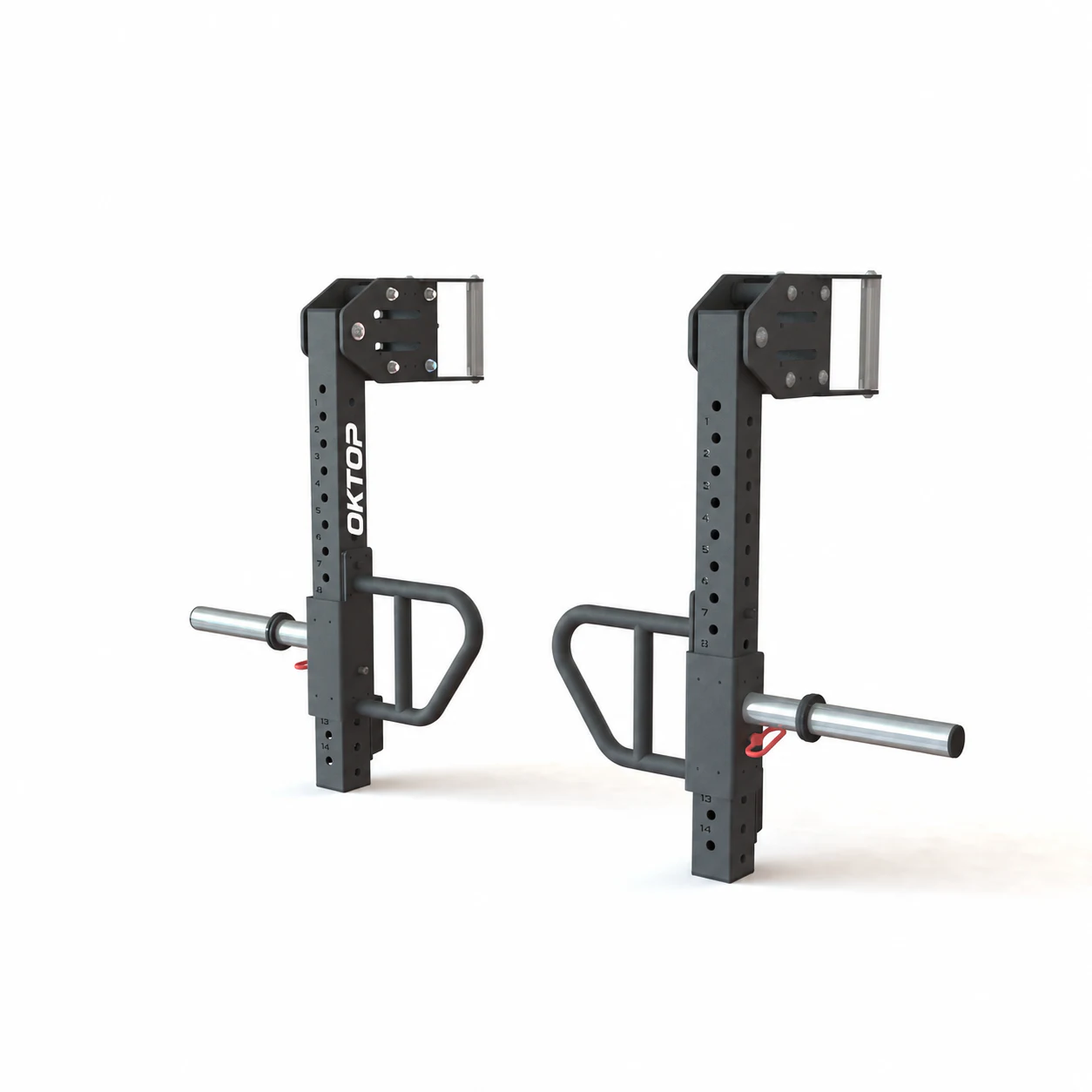
Treat the host rack and attachment as one sourcing question
Commercial rack attachments should not be sourced as isolated accessories. The buyer needs to identify the intended host rack, the exact attachment reference and the commercial setting before asking for a quotation. A product name or product image alone does not establish compatibility, mounting method, clearance, included hardware or final configuration.
OKTOP currently lists OT5152 Landmine Attachment, OT6104 Rack-Mounted Lever Arm Attachment and OT6105 T-Bar Row Attachment in its Rack Attachments category. These references help a commercial gym, project buyer or distributor define the product family under review. The final attachment selection and its relationship to the chosen rack must be confirmed for the specific order.
Begin with the intended rack and commercial use
An attachment brief should state which rack or training structure the buyer plans to use. Capture the host product reference, intended application, number of stations, expected commercial setting and destination market. If an attachment is being considered for an existing site, record the available product information and any relevant site constraints rather than relying on visual similarity.
A clear brief separates facts from questions. It can include:
- the host rack or structure product reference;
- the attachment product reference being reviewed;
- the intended training-area or customer-range context;
- the approximate quantity for the initial order;
- the destination and receiving requirements; and
- the configuration, documentation or site questions that need written confirmation.
This approach helps the buyer compare like with like. It also avoids a common sourcing problem: treating a generic attachment name as proof that it will fit a particular rack.
Ask for configuration evidence, not assumptions
For each selected attachment, request the information that applies to the exact product and host-rack combination. That may include the confirmed configuration, applicable product instructions, required components, mounting information, clearance considerations and any product-specific limitations or warnings.
Do not infer those details from product photography, an older catalogue or another manufacturer’s equipment. If drawings, product information or installation preparation details are needed for an internal review, request them before the buyer approves the selection. Where a project has local site, safety or operating requirements, the responsible parties should assess those requirements against the confirmed information.
This is also the right stage to identify whether the quotation must include related items, labels or documentation. Leaving those points until after a purchase order has been prepared can make a simple accessory order unnecessarily difficult to compare.
Review the product reference with a sample or document check
A sample or documentation review should be tied to the written brief. Confirm that the selected attachment is identified correctly, that the supplied components match the agreed reference and that any necessary product information is available for the buyer’s review.
If factory testing, third-party inspection or a particular acceptance record is required, agree the method and evidence for the selected product before shipment preparation. Do not describe a routine sample check as proof of an unverified performance claim or a universal compatibility result.
For distributor programmes, retain the approved product name, code, image and order-specific notes in the product record. It makes later customer discussions clearer and helps prevent an attachment from being described more broadly than the confirmed information supports.
Keep the project, quotation and receiving check aligned
When requesting offers, use the same host-rack context, attachment reference and quantity with each supplier. Ask the supplier to identify any order-specific items that need confirmation rather than copying assumptions from one quote to another.
Before shipment, confirm what evidence is needed to check product identity, quantity, labels and packing. At receipt, compare the delivery with the approved product schedule and record visible issues while the packaging and labels can still be reviewed. Installation and operating decisions should remain with the qualified people responsible for the site and the confirmed product instructions.
FAQ
Which OKTOP product references are covered in this guide?
The guide uses OT5152 Landmine Attachment, OT6104 Rack-Mounted Lever Arm Attachment and OT6105 T-Bar Row Attachment as current Rack Attachments references.
Can an attachment be assumed to fit any commercial rack?
No. The host rack, attachment configuration, mounting information and applicable requirements must be confirmed for the exact products being considered.
What should a rack-attachment enquiry include?
Share the host rack reference, chosen attachment reference, intended commercial context, quantity, destination market and the documentation or configuration questions that must be answered.
Make the attachment decision traceable
A commercial rack-attachment purchase becomes easier to manage when the host rack, selected attachment and order-specific confirmation points are recorded together. This creates a more reliable basis for quotations, review and shipment preparation.
Browse commercial rack attachments, review OT5152 Landmine Attachment, or send your rack-attachment requirements.