Start the zone with codes, not an abdominal package
Buyers planning a commercial abdominal area often ask for an “ab package” and then receive a mix they did not mean to order. Split the shortlist into the two catalogue groups that already exist, and give every item its own code.
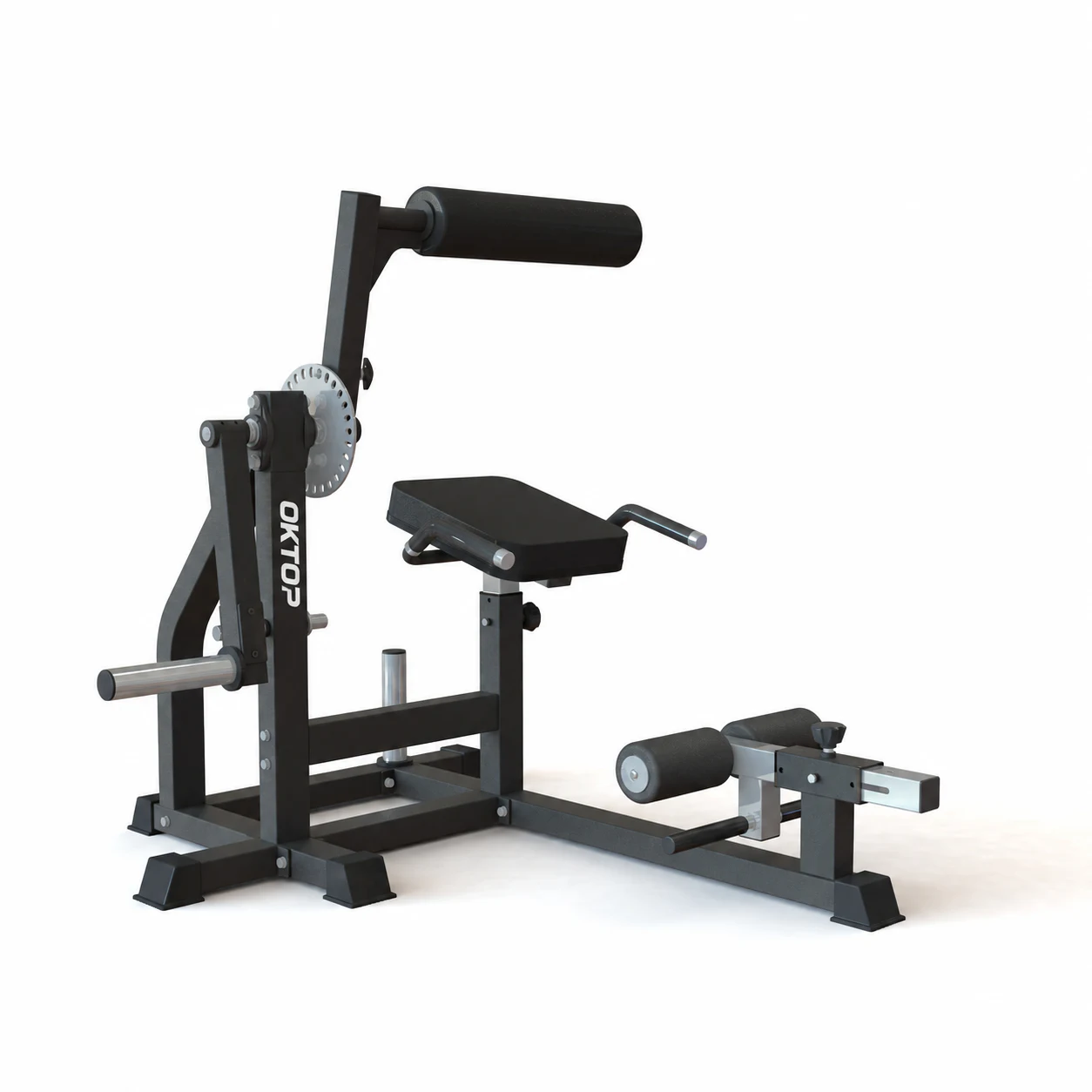
In Strength Machines, OKTOP lists OT5147 Plate-Loaded Abdominal Crunch Machine and OT5142 Kneeling Ab Crunch Machine. Both overviews place the machines in commercial core-training programmes. They do not state seat, pad, handles, plate points, footprint or a user limit. In Benches, the catalogue lists OT2061 Flat Ab Bench-01, OT5130 Sliding Ab Bench and OT5126 Incline Sit-Up Bench as separate references. Those names do not state pad length, incline, wheels or a user limit. A sentence that fits many bench listings is not a specification for these three codes.
Each product page asks the buyer to confirm anything the page does not state, plus the application, quantity and destination market. A zone note that says only “abs” is not a substitute for those codes.
Put machines and benches in different groups
OT5147 and OT5142 are both crunch machines, and they are still separate lines. The catalogue does not say that one replaces the other, or that a plate-loaded format and a kneeling format share a frame, a pad or a loading method. If both are needed, record both quantities. If only one is needed, mark the other as not selected.
The three benches answer a different station question. OT2061 is a flat ab bench, OT5130 is a sliding ab bench, and OT5126 is an incline sit-up bench. None of those names replaces OT5147 or OT5142. A hip-thrust bench or a back-extension bench belongs on its own brief. The strength-area planning guide organises a wider floor. It does not select an abdominal machine or an ab bench.
For the zone file, record:
- each selected code and the catalogue name copied beside it;
- which crunch machine, if either, was reviewed and rejected;
- which ab bench, if any, was reviewed and rejected;
- the commercial setting, such as a member floor, a coached studio, a hotel gym or a distributor range;
- the approximate quantity of each code, and whether the stations are for one room or several sites;
- the destination market and any receiving or storage constraint already known; and
- the pad, path, plate and documentation questions that are still open on each line.
Decide which stations the floor actually needs
A plate-loaded machine, a kneeling machine and a bench do not occupy the same kind of place in a room. The machine is a station members walk up to. A bench may stay in one marked spot, or it may be moved between sessions. The catalogue does not say which pattern applies to a given code, so the file should name the pattern being requested and leave dimensions open until they are confirmed.
Say whether the stations sit beside the strength machines, beside the benches, or in a separate corner, and whether plates for OT5147 are already on the plate order. Do not invent a clearance number. A range sheet that shows one abdominal image is not approval of all five codes.
Ask for the points the names leave open
Before offers are compared, ask the supplier to state the exact reference, the components included and the documents that apply to each code. A machine quoted with plates, or a bench quoted with wheels, is a different scope unless the confirmation says those parts belong to that code.
Ask for the current description, configuration, instructions and packing information. Do not carry a statement about OT5147 across to OT5142, or from either machine across to a bench. Seat position, knee support, sliding path, incline and footprint have to be confirmed in writing. This guide does not assign an exercise or a user limit.
Receive the zone by code
Where a sample or a document review is appropriate, compare it with the written brief for that code. Approval of OT5147 is not approval of OT5142, and approval of one bench is not approval of the other two.
Before shipment, check product identity, quantity, labels and packing, code by code. That check does not replace a local review of floor or user clearance. Price each confirmed reference on its own line, and separate machines, benches, plates, packing and shipping terms. Switching from OT5147 to OT5142, or adding a bench later, needs a reissued confirmation. A carton marked only “ab bench” is not enough when three bench codes were discussed.
FAQ
Which abdominal references does this guide use?
This guide uses OT5147 Plate-Loaded Abdominal Crunch Machine, OT5142 Kneeling Ab Crunch Machine, OT2061 Flat Ab Bench-01, OT5130 Sliding Ab Bench and OT5126 Incline Sit-Up Bench. They are separate catalogue items. Quote a code only when the buyer has selected it, and confirm the product information against the live enquiry before ordering.
Can one crunch machine stand in for the other, or for an ab bench?
No. OT5147 and OT5142 are both described for commercial core-training programmes, and the three benches are separate bench listings. Seat, pad, loading arrangement, footprint and included components are not stated as shared. Confirm each code in writing.
What should an abdominal-zone enquiry include?
Include each selected code and catalogue name, the commercial setting, the approximate quantity of each code, the destination market, and the pad, plate, path or documentation points that still need written confirmation. Keep other benches and strength machines on separate lines.
Name the stations before the zone is drawn
A usable abdominal shortlist names the machine codes, the bench codes, or both, and lists the points that are still open on each line.
Review OT5147 Plate-Loaded Abdominal Crunch Machine, review OT5142 Kneeling Ab Crunch Machine, browse commercial strength machines, browse commercial weight benches, or send your abdominal-station requirements.