Introduction
Commercial free weight equipment is not simply a group of individual products. For a gym operator, distributor or project buyer, it is a connected strength-training system. Dumbbells need suitable storage, barbells need compatible plates and racks, and benches need working clearance. A useful range supports the way a facility will actually operate rather than filling a room with catalogue items.
This guide explains how to prepare a commercial free weight shortlist around product application, user flow, installation preparation and the information needed for a clearer enquiry. Product-specific dimensions, materials, load ratings, packaging and commercial terms should always be confirmed for the selected model and order.
What belongs in a commercial free weight range?
A commercial free weight programme can include dumbbells, barbells, weight plates, kettlebells, benches, racks, supports and storage. The final mix depends on the training programme, expected users and available space.
For a full-service gym, the priority may be simultaneous access: several users may need dumbbells, benches or rack stations at the same time. A studio may need a smaller but flexible mix for coached sessions. A distributor may need a clear category structure that makes products easy to present, quote and replenish.
The most useful first question is not “Which product is best?” It is “How will this range be used?” Define the facility type, the main training formats, approximate user numbers and the space available before selecting individual products.
Build the range in connected product groups
Dumbbells and storage
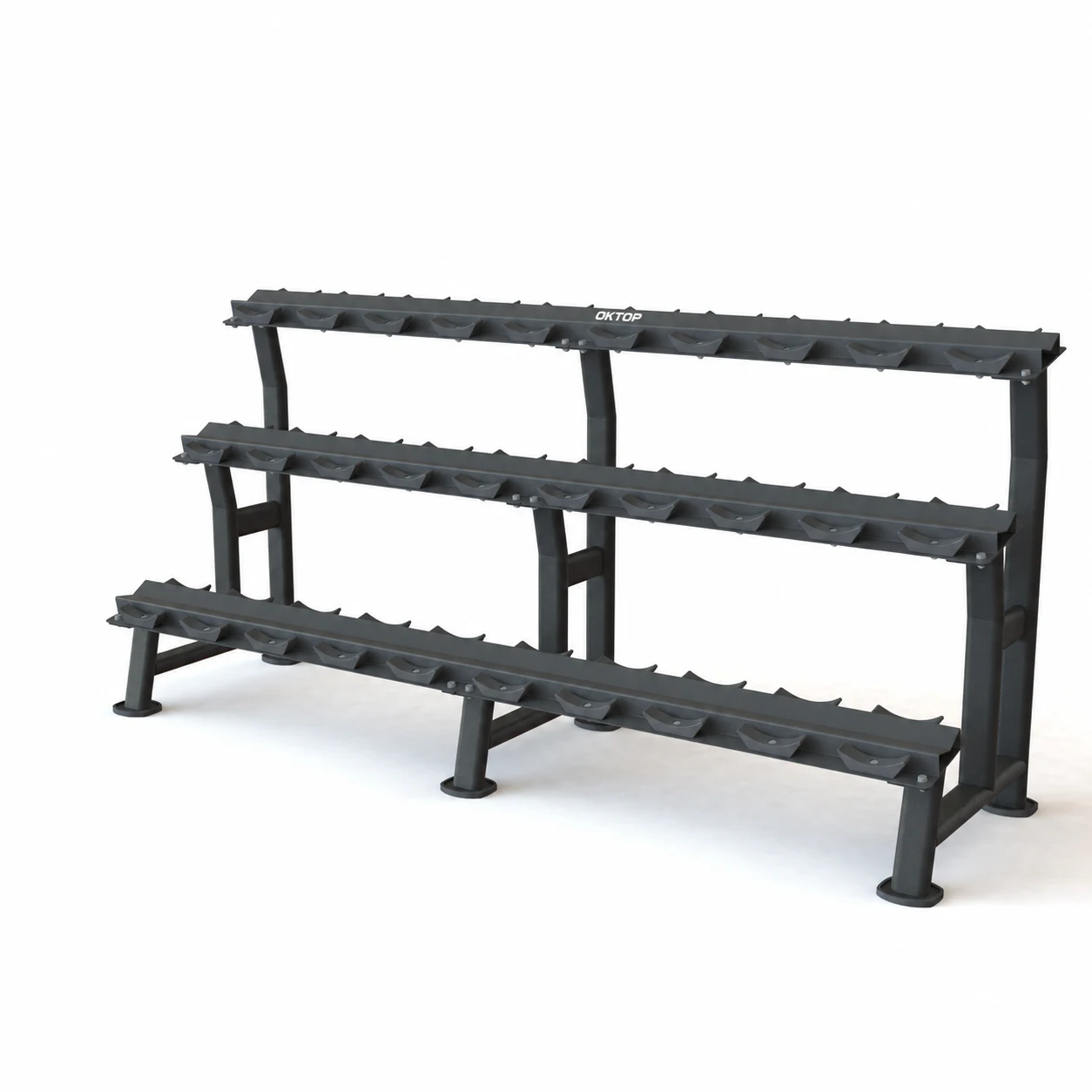
Dumbbells are usually one of the most visible product groups in a commercial strength area. Buyers should confirm the available range and increments for the selected model, the product marking, the finish, the handle design and compatible storage. A dumbbell order should not be reviewed separately from its rack: users need safe access, a clear return point and working space in front of the storage.
Fixed dumbbells can help several users access different loads quickly. Adjustable dumbbells may be considered for compact or controlled training settings. Neither option is automatically right for every facility. The training format, user access and selected product documentation should guide the decision.
Barbells, plates and collars
Barbells and plates should be specified as one system. The buyer should identify the intended training application, required plate type, barbell interface, collars, storage and the route users will take when loading or returning plates. A total weight figure alone does not explain the actual plate mix needed for a project.
Ask for product-specific information for the selected models. Confirm the required product codes, final list, compatible accessories and storage before releasing an order. Where a rack or support is involved, include it in the same review rather than treating it as an unrelated item.
Kettlebells and portable tools
Kettlebells support carries, presses, squats, swings and coach-led conditioning. Their value depends on a sensible progression, clear identification and storage that does not interrupt other training stations. A buyer should define the intended programme, expected user profile and whether the products will remain in one strength area or move between zones.
Benches, racks and supports
Benches and racks shape the way a strength area works. A bench needs clearance for the exercise and access to the relevant dumbbells or barbell. A rack-based station needs a clear training area, plate storage and, where applicable, site-specific installation review.
For racks and supports, confirm assembled dimensions, floor conditions, fixing method where relevant, ceiling clearance, delivery access and assembly requirements for the selected product. Local building and safety responsibilities remain with the relevant project team.
Plan user flow before finalising quantities
Commercial buyers should review movement routes before finalising the list. Consider entry and exit paths, access to dumbbell racks, bench working zones, plate-loading routes, coach sightlines, cleaning access and product-return locations.
A layout can look efficient while creating daily conflicts. For example, a dumbbell rack immediately behind a bench may fit on a drawing but may prevent two users from training safely at the same time. Storage should be close enough to the equipment it serves without blocking an active station or walkway.
Prepare a clearer product brief
A useful first enquiry does not need every final specification. It should include enough context for relevant product information to be reviewed:
- Facility type or buyer type
- Required categories or product codes
- Intended commercial application
- Approximate quantity or product range
- Available layout or room information
- Destination market
- Branding, packaging or documentation requirements
- Installation-sensitive equipment
- Requested factory testing or shipment inspection points
This information helps a supplier discuss the selected range without making unsupported assumptions about specifications, pricing, timing or certification.
Factory testing and shipment inspection: what should be checked?
For a commercial order, agree the inspection scope for the actual products. Depending on the selected model, useful confirmation points can include product code, quantity, visible finish, product marking, dumbbell pair matching, rack hardware count, carton labels and packing-list alignment.
Where a buyer requires factory testing or a pre-shipment inspection, ask what order-specific evidence can be provided. Product photos, videos, parts lists or an agreed checklist may make handover clearer, but they should be linked to the final order rather than generic claims.
FAQ
What equipment is included in commercial free weight equipment?
It can include dumbbells, barbells, plates, kettlebells, benches, racks, supports and storage. The final list should match the planned training use and available space.
Why should storage be included in the original order?
Storage affects product access, user safety, reset time and circulation. Planning it with the free weight range helps avoid equipment that fits physically but is difficult to operate.
What should a distributor include in a free weight enquiry?
Include the category or product codes, target market, approximate quantities, intended customer type and any branding, packaging or documentation requirements.
Conclusion
A commercial free weight range works best when products are chosen as a system. Connect dumbbells with storage, barbells with plates and racks, and all loose equipment with a practical return location. Start with the intended application, then confirm product-specific information for the selected order.
Planning a commercial free weight range? Explore OKTOP Free Weight Equipment or send your requirements with your categories, approximate quantity, intended application and destination market.