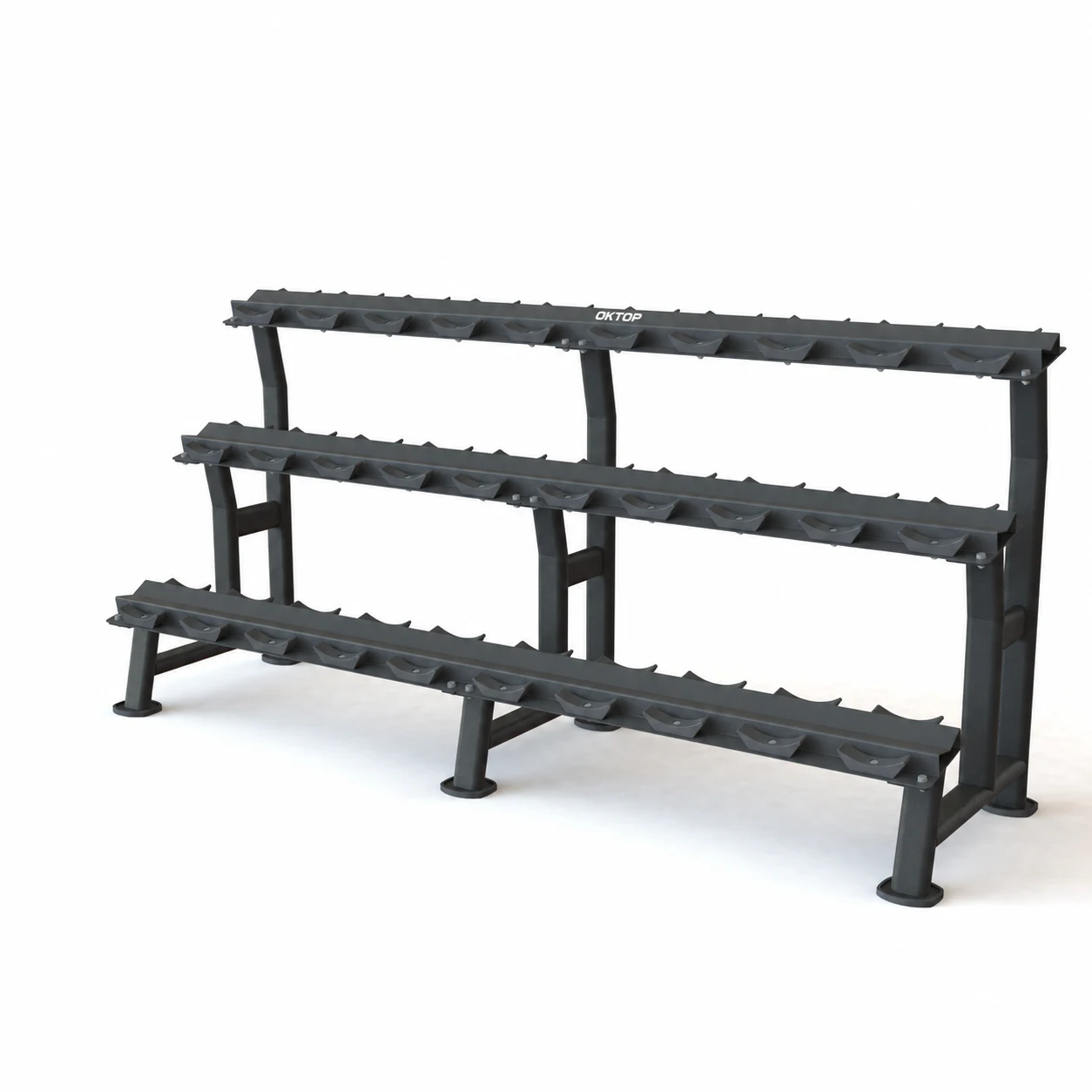
Storage should be planned with the equipment, not after it. A commercial gym storage rack affects how quickly members can find and return equipment, how safely a training floor operates, how easily staff can reset a zone and how professional the facility looks during a site visit.
For distributors, storage also turns individual products into a more complete commercial solution. This guide explains how to select storage racks for dumbbells, plates, barbells and training accessories by looking at the actual equipment mix, user flow, product application, installation preparation and shipment inspection.
The direct answer
Choose storage by the products it must hold, the training zone it serves and the way users move through the space. Confirm compatibility with the intended dumbbells, plates or barbells rather than choosing a rack only by its length or appearance. Include storage in the initial layout, product list and receiving plan.
Start with the equipment mix
Before selecting a rack, create a simple inventory. Include dumbbell type and weight progression, kettlebell quantities, plate type and diameter, barbell quantity, cable attachments, medicine balls, sandbags and smaller training accessories. Then connect each item to the area where it will be used.
A dumbbell rack beside a bench area serves a different purpose from a plate tree beside a power rack. A vertical bar holder may suit a lifting zone, while a mixed accessory unit may support a functional training space. The basic question is: can a user pick up, use and return the item without crossing another training lane?
Main types of commercial gym storage
Dumbbell racks
Dumbbell racks keep fixed dumbbells visible, accessible and separated by weight. They are common in free-weight areas, studio strength zones, hotel gyms and showroom displays.
When reviewing a dumbbell rack, confirm the intended dumbbell profile, weight range, number of pairs, shelf angle, return access and clearance around nearby benches. Do not choose only by how many units the rack appears to hold. Different head shapes and handle designs can sit differently on a shelf.
Weight plate storage
Plate storage can include plate trees, vertical pegs, integrated rack storage and wall-adjacent systems. The right choice depends on plate diameter, thickness, use area and the route around the lifting position.
Keep frequently used plates close enough to the primary station to reduce unnecessary carrying, but do not narrow the lifting lane or create a trip hazard around a rack or platform. If the project has bumper, cast and specialty plates, provide the selected product codes during quotation so the intended application can be confirmed.
Barbell storage
Barbell storage can be vertical, horizontal, wall-mounted or integrated into a larger system. Confirm the number and type of bars, required separation, access for users, ceiling clearance and whether a permanent location is appropriate for the project.
For a distributor or project buyer, barbell storage should be a visible line item. It should not be assumed to be included with a rack, platform or barbell order.
Functional and accessory storage
Functional zones often need a mixed storage approach. Cable handles, resistance tools, sandbags, medicine balls, agility products and mobility accessories should have clear return points. The goal is not to hide every item. It is to make the space easier to coach, reset and use safely.
Match storage to user flow
Storage is a capacity decision and a user-flow decision. In a busy free-weight zone, users may move between benches, mirrors, lifting stations and walkways. A rack should support that movement rather than interrupt it.
Consider these questions:
- Can two users access the rack without blocking each other?
- Is there enough clearance to return a dumbbell or plate safely?
- Does the rack create congestion near an entrance, mirror or cleaning route?
- Are frequently used items easy to reach?
- Can staff see when equipment is out of place?
For example, a dumbbell rack may work best parallel to a bench line rather than directly behind it. A plate-storage system may be more useful beside a rack than in the middle of the room. Small accessories may belong near the functional zone, while reserve inventory can remain back of house.
> Need a storage shortlist for a commercial project? Send OKTOP your product list, room layout or floor plan. Get a Storage Recommendation
Capacity is more than a product count
“How many dumbbells does this rack hold?” is an important question, but it is not the only one. Capacity must be checked against product size, shape, total loaded weight, shelf spacing, actual footprint and access clearance.
Ask the supplier to confirm the rack’s intended product application. If the order uses a mixed range, share the intended dumbbell, plate or barbell models. A generic product image is not a substitute for confirming that the selected products fit securely and remain practical to return after use.
This matters when a project combines round, hexagonal, urethane, rubber or specialty dumbbells. Plate thickness can also vary between bumper, cast and specialty plates. Product compatibility should be checked before the rack is added to a final quotation.
Construction and daily commercial use
A commercial rack is repeatedly loaded, unloaded, cleaned and moved around by members and staff. Buyers should inspect its construction in the context of daily use.
Useful review points include visible finish consistency, stability when loaded, contact surfaces where relevant, accessible fasteners, assembly method, labels and the ease of cleaning around the rack. The objective is a safe, repeatable training environment, not an exaggerated performance claim.
When factory testing evidence or assembly evidence is available, request it for the selected rack model and proposed product application. For a larger project, include storage systems in the shipment inspection list rather than treating them as minor accessories.
Include storage in installation preparation
Before dispatch, confirm the product codes, quantities, assembled or knock-down packing method, carton dimensions, assembly instructions and planned location by zone. Also review the receiving route: doors, elevators, corridors, stairs, loading access and temporary storage space.
A zone-by-zone plan can simplify installation. Cartons may be marked or grouped for “Free Weight Area,” “Functional Zone,” “Studio” or “Storage Room” rather than arriving as an unidentified mixed delivery. The project team should still confirm local floor, wall and installation conditions where those are relevant.
Common mistakes to avoid
Buying storage after the equipment list is final
This often creates a crowded layout and no clear home for accessories. Add storage to the earliest product and layout discussion.
Mixing incompatible products and racks
Not every dumbbell, plate or bar fits every rack in the same way. Confirm the intended models with the supplier.
Focusing on rack count instead of flow
Two smaller racks in appropriate locations may be more useful than one large rack that users cannot access comfortably.
Ignoring future range expansion
Consider whether the selected storage line can support future weight increments, new bar types or an expanded accessory range.
FAQ
What storage racks are essential for a commercial gym?
Most free-weight areas need suitable dumbbell, plate and barbell storage, plus a clear plan for smaller accessories. The final list depends on the facility’s equipment mix and layout.
Should dumbbells and plates be stored in the same area?
They can be, provided the layout maintains safe movement and gives each category a clear return point. A shared zone should not become congested.
How do I check rack compatibility?
Share the intended product codes, dimensions or product images with the supplier and ask for confirmation of the rack’s intended application.
What should be inspected before shipment?
Review model identity, quantity, finish, included hardware, packing, carton marks, assembly information and compatibility with the agreed equipment list.
Conclusion
Commercial gym storage is part of equipment selection, facility flow and the daily member experience. The best storage plan starts with the actual products, the training zone and the way users move through the room.
Choose racks that fit the intended dumbbells, plates, barbells and accessories. Confirm access, spacing, assembly and delivery preparation before shipment so the receiving team can build a cleaner, more practical commercial floor.
Need commercial storage options for your range or project? Share your product shortlist, target market and estimated quantities with OKTOP. Get a Quote