Introduction
Commercial hybrid training is not a single product category. It is a way of combining sustained cardio, loaded movement, carries, pulls, pushes and repeatable stations into a coherent member experience. For a gym owner, distributor or project buyer, that distinction matters: purchasing a rower, a few kettlebells and a sled separately does not automatically create a usable hybrid-training offer.
A strong equipment plan starts with the training sessions the facility intends to run. Will the zone support coached small groups, open-gym conditioning, race-style preparation, personal training, or a mix of all four? The answer affects quantities, circulation, machine selection, storage and the level of durability required. This guide explains a practical way to scope commercial hybrid training equipment without relying on a generic “package” list.
The examples below are intentionally specification-led rather than brand-led. Final dimensions, materials, load ratings, console functions and installation requirements should always be confirmed for the chosen models before an order is released.
What is commercial hybrid training equipment?
Hybrid training equipment supports sessions that move between endurance work and functional strength with minimal interruption. In a commercial setting, a typical range may include air bikes, rowing machines, ski machines, sleds, wall targets, training ropes, wall balls, kettlebells, dumbbells, weight plates, sandbags and a functional training rig.
The commercial requirement is different from a home-gym requirement. Equipment may be used by many people each day, moved repeatedly, cleaned often and placed in a supervised class environment. A project buyer therefore needs to evaluate more than the exercise itself:
- Whether the frame, fasteners, wear surfaces and contact points suit the expected use pattern.
- How the product fits into a station rotation, not only whether it looks good alone.
- Whether users and coaches can understand the setup quickly.
- How the machine, rig or sled will arrive, be assembled and be maintained.
- Whether replacement and accessory requirements are clear before procurement.
This is why a commercial hybrid equipment list should be built around workflows and not around a catalogue sequence.
Step 1: Define the operating model before choosing products
Coached group training
For group sessions, repeatability and traffic flow are usually the priorities. Coaches need to see each station, members need enough separation to move safely, and transitions must be simple. Buying one very sophisticated machine can be less useful than buying a balanced station mix that keeps a group moving.
Start with a session map. Write one representative 40- to 60-minute class and identify every station, the time at each station, the number of participants and the equipment handoff. This exercise reveals bottlenecks early. If twelve people are likely to use one rower in a short rotation, the programme needs either additional cardio stations or a different interval design.
Open gym and personal training
Open-gym use calls for flexibility. Members may use a sled for strength work, an air bike for intervals, or a rig for bodyweight and barbell-adjacent training. Clear storage and obvious boundaries become more important because there is less continuous coach control. Equipment that can serve more than one training purpose is valuable, but it should not compromise safe use or maintenance access.
Distributor or multi-site projects
Distributors and operators with several sites should plan a core specification and a controlled option list. A core specification keeps the visual identity, user experience and spare-parts logic consistent. Options allow a smaller site to use fewer stations without changing the entire training concept. Before quoting, document target markets, voltage or console preferences where relevant, language requirements, branding needs, shipping destination and installation responsibilities.
Step 2: Build the zone around four movement families
An effective hybrid training zone usually needs all four families below. The exact product count follows the session design and footprint.
1. Repeatable cardio stations
Air bikes, rowing machines and ski machines each create a distinct movement pattern and pacing experience. Together they let coaches vary sessions while retaining a measurable, repeatable conditioning element. Evaluate them as a group: access around the machine, user adjustment, monitor visibility, moving-part protection, noise expectations and service access are practical project questions.
For a commercial buyer, the useful question is not “Which is the hardest?” It is “Can this station be operated safely and consistently by the intended users, in the intended room, throughout the proposed class timetable?” A machine should also fit the facility’s cleaning routine and allow a technician to inspect common wear points without disassembling half the zone.
2. Push, pull and drag work
A sled creates direct push and pull work but needs a planned lane, appropriate flooring and clear turning space. Training ropes require solid anchors and sufficient swing radius. These stations can create a dramatic training experience, yet they are the products most likely to cause layout problems when added late.
Confirm the lane length, surface type, how sled contact will behave on that surface, the plate-loading arrangement, anchor method and the safe return path. Ask the supplier for assembled dimensions and a product drawing, not just a hero image. For shipment inspection, confirm which parts are supplied loose, how they are labelled and what hardware is included.
3. Loaded portable tools
Kettlebells, wall balls, sandbags, dumbbells and weight plates make a zone adaptable. They support carries, squats, presses, throws where appropriate, loaded step-ups and numerous coach-led variations. The procurement challenge is not merely selecting weight increments; it is creating an easy-to-understand progression that matches the likely member profile.
Specify the range rather than simply a total kilogram figure. A studio serving beginners and advanced members may need different increments from a performance-focused facility. Consider handle feel, coating, storage compatibility, identification, floor protection and the way loose tools will move between stations. A well-designed storage plan also shortens reset time between classes.
4. Fixed functional infrastructure
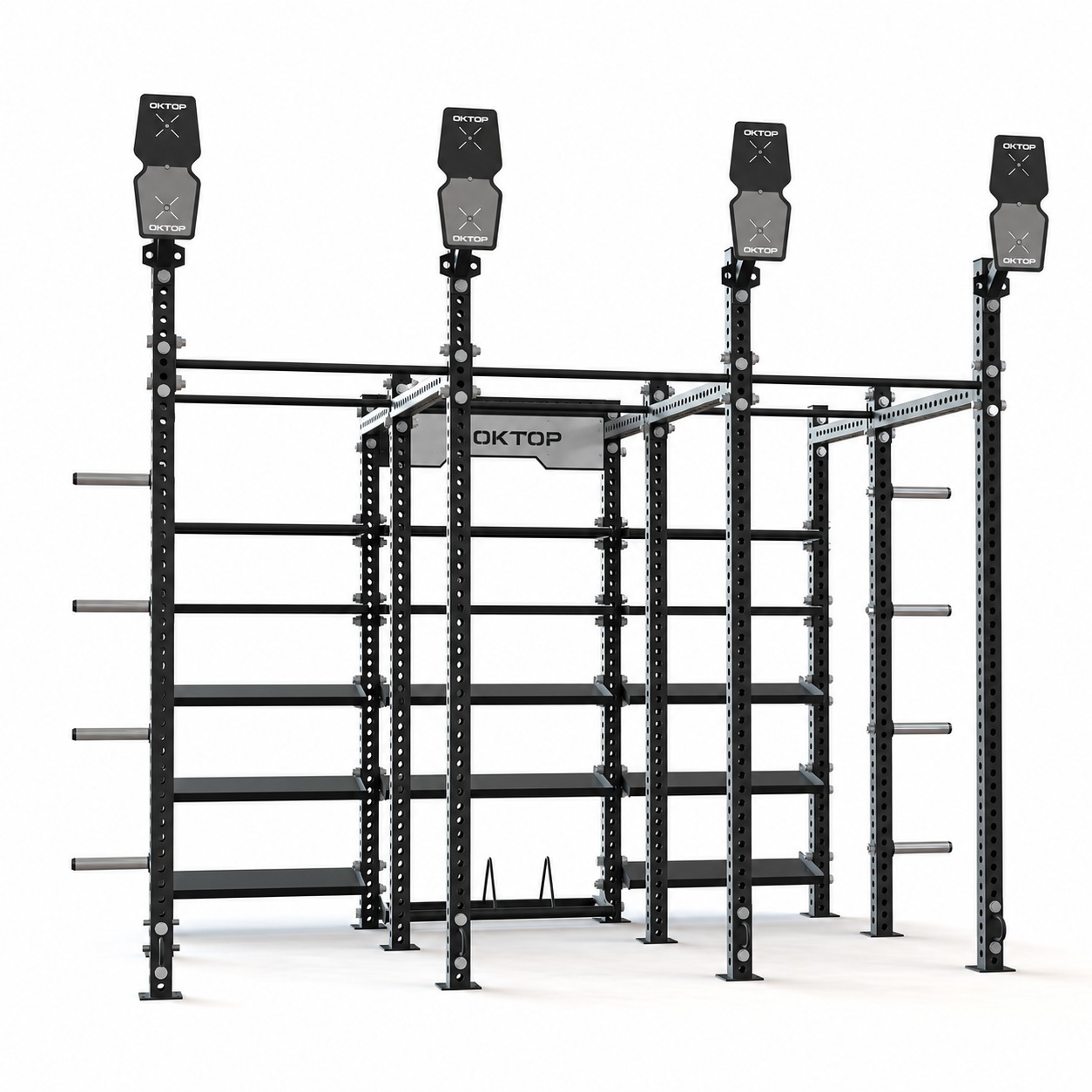
A functional training rig and wall target establish the zone’s permanent structure. They can organise suspension work, pull-ups, attachments and target-based exercises, but they require the highest level of installation preparation. The buyer should confirm the site dimensions, floor condition, wall construction where applicable, fixing method, access for installation and any local building or safety approvals that apply to the project.
Do not assume a rig can be installed wherever it fits visually. Obtain the final footprint, height, fixing requirements and assembly drawings, then have the local project team review them before shipment. This is a simple step that prevents costly changes after goods arrive.
Step 3: Select equipment by use case, not by trend
Boutique studio
A boutique studio often benefits from a compact mix with a clear class format: selected cardio stations, a controlled sled lane, portable loaded tools and storage. The objective is to make the room feel energetic without filling every square metre. Choose products that support fast coach briefings and predictable member flow.
Full-service commercial gym
In a larger gym, the hybrid zone should complement the cardio floor and free-weight area. It may serve coached sessions during peak hours and open users at other times. Distinct flooring, storage and wayfinding help members understand where sled work ends and general free-weight activity begins.
Sports club or performance facility
Performance facilities often prioritise programming flexibility, robust transport paths and equipment that accommodates different team sizes. The buyer should involve coaches early, especially when choosing weight increments, target heights, rig configurations and seasonal storage requirements.
Step 4: Use a supplier-ready request for quotation
The fastest way to receive a comparable quotation is to supply enough project information at the first contact. A useful RFQ includes:
- Facility type, country and target opening date.
- Available zone dimensions, ceiling height and relevant drawings.
- Intended session format and approximate group size.
- Product shortlist and preferred quantities, or a request for a suggested mix.
- Branding, packaging and labelling needs.
- Delivery location, unloading constraints and whether installation is included locally.
- Documentation requested: drawings, assembly guidance, packing list, warranty terms and inspection records.
This helps a supplier identify whether the project needs an equipment list, a layout discussion, a custom rig configuration, or all three. It also avoids comparing quotations that include different accessory sets or installation assumptions.
Factory testing and shipment inspection: what to request
“Commercial grade” is not a complete procurement standard. Ask what is checked and how it is recorded for the actual order. Depending on the item, sensible questions include whether moving parts are checked for smooth operation, whether fasteners and weld areas receive a visual inspection, whether consoles power on where supplied, and whether an assembled sample can be reviewed before packing.
For shipment inspection, request product photos or videos showing the ordered model, finish, labels and quantities. Match the packing list to the purchase order. For complex items such as rigs, sleds and wall targets, ask for a parts list and assembly reference so the receiving team can identify components immediately. These requests do not replace local acceptance procedures, but they make handover clearer.
Common buying mistakes
Buying equipment before measuring the workflow
An attractive product list can fail when machines block walkways or portable tools have nowhere to reset. Map the circuit first.
Treating all cardio stations as interchangeable
Air bikes, rowers and ski machines create different positions, cadence patterns and learning demands. A mixed selection often gives coaches better programming options than repeated copies of one machine.
Leaving flooring and fixing decisions to the last minute
Sled lanes, rigs and wall-mounted products should be discussed with the site and installation team before the purchase order is final.
Quoting without an accessory list
Confirm plates, collars, storage, anchors, fasteners, display or console options and replacement parts. A product image rarely shows the full scope needed to run a station.
FAQ
What equipment is needed for a hybrid training gym?
Most commercial projects combine repeatable cardio stations, a push/pull station such as a sled or rope, portable loaded tools, storage and fixed functional infrastructure where the site supports it. The final list should follow the intended class format and footprint.
Is an air bike, rower or ski machine best for hybrid training?
There is no universal winner. An air bike is accessible for many users and supports hard intervals; a rower combines lower-body drive with pulling; a ski machine emphasises a standing pull pattern. Many facilities use a mix so programming can vary.
What should I ask a commercial equipment supplier before ordering?
Request final specifications, assembled dimensions, drawings where installation is involved, product and packaging details, a complete accessory list, inspection information, lead-time confirmation for the specific order and after-sales terms.
Can a hybrid training zone work in a small studio?
Yes, when the programme and equipment count are designed around circulation. A smaller zone benefits from selected stations, defined storage and a layout that avoids placing every product against a wall without working clearance.
Conclusion
Commercial hybrid training equipment works best as a system: cardio, loaded movement, push/pull work, infrastructure, storage and installation planning must support the same member journey. Define that journey first, then use final product documents and an installation review to turn it into a reliable procurement list.
CTA: Plan your hybrid training range
Need a product shortlist or a project-ready equipment mix? Explore OKTOP Hybrid Training Equipment or send your requirements with your facility type, available space and target quantities.