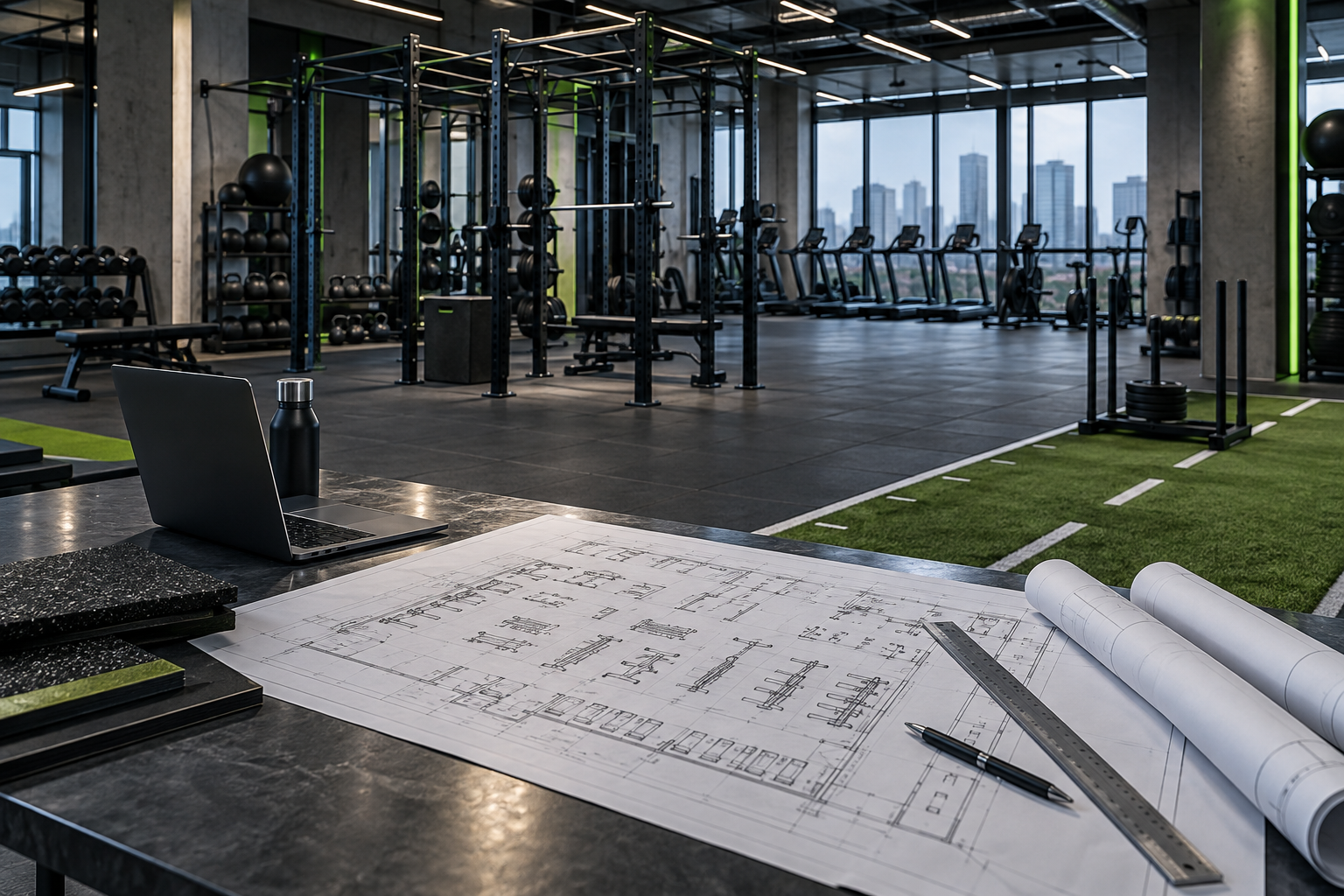
A commercial gym equipment quotation is only as useful as the request behind it. When an inquiry says only “please send your best price,” a supplier must guess the product range, quantities, use case, destination, packaging needs and delivery assumptions. The result is often a catalogue response rather than a quotation that can be compared or approved.
A well-prepared gym equipment RFQ turns a broad sourcing request into a structured commercial brief. It helps distributors, project buyers, gym operators, contractors and fitness brands receive a more relevant quotation while preparing for factory testing, shipment inspection and installation.
The direct answer
An effective gym equipment RFQ should state the project context, destination, product list, model codes or descriptions, quantities, application, branding needs, packing requirements and the questions the buyer needs answered. It does not need every final detail, but it should make clear what is confirmed and what still needs review.
Start with the project context
The first section should explain the purpose of the order. Is the buyer building a distributor range, equipping a new commercial gym, adding a functional zone, opening a studio, preparing a hotel fitness room or developing a private-label line?
This context helps a supplier understand the product application. A high-use strength floor, hotel gym, boutique studio and distributor showroom can all need different product combinations even when they request similar categories.
Attach available materials where useful:
- Floor plan
- Product schedule
- Reference images
- Brand guide
- Tender specification
- Existing model codes
- Target receiving period
A floor plan is helpful, but it is not a replacement for a product list. One explains the space; the other explains what must be quoted.
Define products by category, model and quantity
The clearest RFQs use model codes where possible. Rather than writing “commercial dumbbells,” identify the product category, preferred product type, product code if available, weight range or set composition, quantity, required storage and notes about intended use.
Use the same structure for benches, racks, functional trainers, plates, barbells, cable attachments, accessories and hybrid training equipment. If the buyer has not selected a model, provide a functional description and reference image, such as “commercial adjustable bench for a multi-user strength area” or “plate storage for bumper plates beside power racks.”
| Category | Model code or description | Quantity | Required options | Notes |
|---|---|---|---|---|
| Free Weight | Product code or selected type | Confirmed or estimated | Branding, colour, storage | Intended user group |
| Functional Training | Product code or equipment brief | Confirmed or estimated | Accessories, configuration | Floor-plan location |
| Training Accessories | Product code or product group | Confirmed or estimated | Labels, packing | Required combinations |
| Hybrid Training | Product code or product group | Confirmed or estimated | Product application | Coaching or conditioning use |
State the target market and destination
Destination information affects more than freight. It helps the buyer and supplier discuss packing, carton marks, documentation, receiving conditions and shipment assumptions.
Include the destination country, city or port if known, final-use location, and whether product pricing should be quoted separately from shipping. It is acceptable to mark details as “to be confirmed.” An approximate destination is still more useful than no destination at all.
For example, a buyer might state the country, a preferred port if applicable, the facility type, whether the receiving site is a warehouse or project location, and any known access constraints. This prevents product pricing and logistics assumptions from becoming mixed together without explanation.
Clarify branding and documentation requirements
If the request includes private label or OEM work, say so at the start. Supply logo files, desired logo locations, brand colours, packaging or carton-mark requirements, language needs for manuals, and label requirements.
Do not write “custom logo everywhere” without product context. A logo on a dumbbell, bench, weight plate, cable attachment or carton may require different methods. Ask the supplier to state which options are practical for each selected model and which items need further approval.
Include product application and site conditions
Product application helps a supplier recommend or quote the appropriate configuration without guessing. Include the facility type, training formats, approximate room size, ceiling height where relevant, floor conditions, access route, existing equipment and the party responsible for assembly.
For a functional zone, explain whether it will support general conditioning, small-group coaching, strength circuits or multi-station training. For a free-weight project, explain whether the goal is a compact hotel selection, a full commercial strength area or a distributor-ready range.
> Need help turning a product list into a clearer request? Send OKTOP your current brief, floor plan or selected product codes. Send Your Requirements
Ask for a comparable quotation structure
The buyer should ask each supplier to respond to the same structure. A useful quotation shows product name and model code, quantity, unit and total prices, included accessories, branding options, relevant product information, packing method where available, documentation, quote validity, payment terms and delivery assumptions.
Do not assume every quote includes the same accessories, hardware, branding treatment or packing level. A lower total price may reflect a different scope. Keep product, branding, logistics and commercial questions in separate columns when comparing quotations.
Build inspection into the RFQ
Inspection should not be a final-stage surprise. State the evidence and review points that matter before production is complete. Depending on the selected product and agreement, this may include model identity, quantity, visible finish, movement or adjustment demonstration, accessories, logo placement, packing condition, carton marks and loading preparation.
The phrase “factory testing” should always be connected to the specific model and agreed requirement. Ask what can be observed or documented for the order being prepared. If the buyer needs an independent inspection party, communicate this early enough for the supplier to coordinate product readiness and access.
Supplier evidence supports a purchase decision, but it does not replace destination-market compliance checks, site acceptance or any inspection process required by the buyer’s own policy.
Prepare for delivery and installation
Large fitness equipment orders require a receiving plan as well as a price. Identify who will receive the goods, unload cartons, move equipment to each room, assemble products, dispose of packaging and check quantities against the packing list.
Also identify door widths, elevator capacity, corridor turns, stairs, loading access, project-site working hours and temporary storage space. These details may not change the product selection, but they can change the practical installation sequence.
For multi-zone projects, ask whether cartons can be identified by room or zone. A simple plan for free-weight, functional-training and accessory cartons can reduce unnecessary handling after arrival.
A reusable RFQ checklist
Buyer information
- Company and contact person
- Email and phone or WhatsApp
- Country and target market
- Buyer type: distributor, gym, project buyer, contractor or brand
- Project reference
Product and project information
- Facility type and intended application
- Product codes, descriptions and quantities
- Product options or branding needs
- Floor plan or product schedule, if available
- Destination country, city or port
- Target receiving period
Questions for the supplier
- Please quote the selected products by model and quantity.
- Please list included accessories and exclusions.
- Please identify available branding options by model.
- Please confirm known packing and shipment assumptions.
- Please identify information that remains open before final quotation.
- Please advise what order-specific testing or shipment inspection evidence can be prepared.
Common RFQ mistakes
Asking for “all products and prices”
This usually produces a large catalogue response rather than a usable quotation. Start with the categories, models and applications that matter to the project.
Omitting quantity
Quantity affects pricing, packing, loading and production planning. If the final figure is unknown, provide a range and label it as an estimate.
Combining all questions in one unstructured paragraph
Separate product, branding, logistics, documents and commercial terms. It makes clarification and comparison much easier.
Treating inspection as a last-minute request
Confirm the intended shipment-inspection approach before goods are ready to dispatch.
FAQ
What should a gym equipment RFQ include?
Include project context, destination, product list, model codes or descriptions, quantities, branding requirements, packing needs, requested quotation format and delivery questions.
Do I need model codes before requesting a quotation?
Model codes help, but they are not required. A structured product description, intended application and reference image can be used while final models are still being selected.
Should shipping be included in the first quotation?
It can be quoted separately or included as an assumption. State the destination and ask the supplier to clarify what is included and what still requires confirmation.
How can quotations be compared fairly?
Compare product scope, model identity, accessories, branding, packing, documents, payment terms and shipment assumptions line by line, not only the final total.
Conclusion
A strong gym equipment RFQ does not make sourcing more complicated. It makes the important details visible early. By defining the products, quantities, destination, branding needs, application, packing requirements, inspection approach and installation conditions, buyers can receive quotations that are easier to evaluate and closer to the real project.
Ready to prepare a commercial equipment quotation? Send OKTOP your product list, floor plan or project brief, target market and estimated quantities. Get a Project Quote