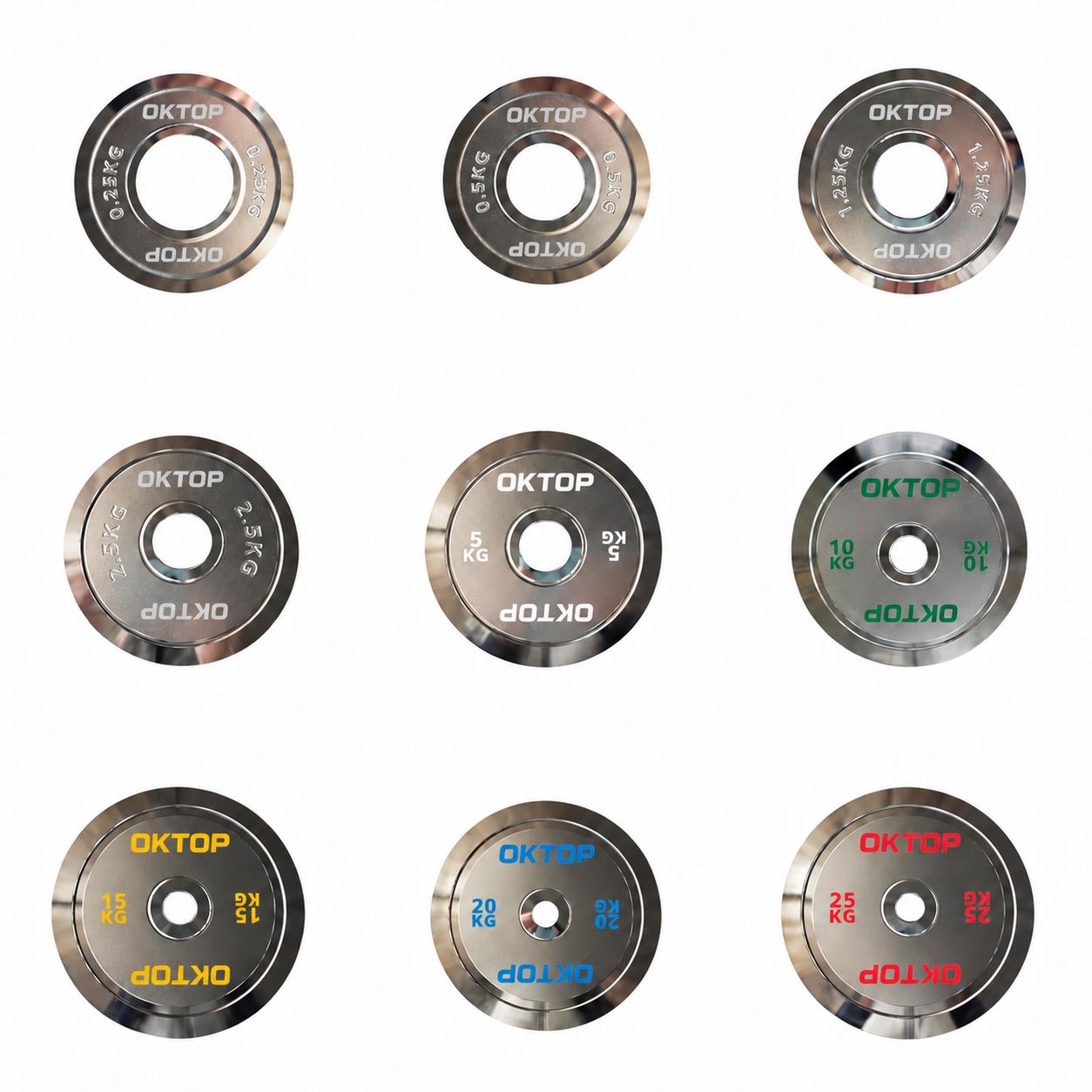
Weight plates look simple, but a commercial plate selection can affect how a strength area is used, stored, quoted, packed and received. The right choice depends less on a single “best” plate and more on the training programme, barbell work, user profile, storage arrangement and the buyer’s product-range goals.
This guide helps gym operators, distributors and project buyers compare common commercial weight-plate categories: bumper plates, Olympic plates, powerlifting-style plates and fractional plates. It is intended to support a product shortlist, not to prescribe exact technical specifications. Loadable dimensions, materials, tolerances, collars, markings and compatibility should always be confirmed for the selected model before purchase.
Start with the training environment
The first question is not “which plate is strongest?” It is “how will this part of the facility be used?” A commercial gym may need a general strength area, a barbell-training zone, platform-based lifting, coached small-group sessions or a combination of these. The answer determines which plate categories deserve priority.
Consider the following before comparing product images:
- What barbell movements and training formats will the area support?
- Will plates be moved frequently between racks, platforms and storage?
- Are members expected to use a defined selection or will coaches manage the equipment?
- Is the project buying a focused strength set, a broad multi-use range or a distributor assortment?
- Which storage solution will keep the selected plate types identifiable and accessible?
A plate range is usually easier to source when the buyer defines the intended use first. This also gives a supplier enough context to recommend relevant product categories without guessing at performance, compliance or site requirements.
Bumper plates: for barbell-oriented training environments
Bumper plates are commonly considered when a facility plans barbell movements that benefit from a robust, repeatable plate format. They are frequently discussed for strength-training floors, coached lifting areas and functional training environments. A buyer should review the exact plate construction, diameter, collar fit, weight selection, marking and intended use for the chosen model rather than assume that all bumper plates share the same features.
When bumper plates may fit the brief
They may be relevant where barbell work is a regular part of the programme, where coaches need clearly identifiable plate selections or where the facility wants a dedicated lifting area. The required selection depends on the programming and user profile. An experienced strength facility may need a different set from a general commercial gym that uses barbells as one part of a broader training offer.
Questions to include in the sourcing brief
Ask the supplier to confirm the selected product code, available selection, visible markings, packaging, compatible storage and any model-specific product information. If the project has a lifting platform, flooring or barbell requirement, include those items in the same discussion. A plate is only one part of the operating system.
Olympic plates: for broad commercial strength use
Olympic-style plates can be used in a wide range of commercial strength environments. The useful comparison is not simply “Olympic versus bumper.” Buyers should identify whether the selected plate format matches the barbell and training equipment in the planned area, then confirm available selections and storage needs.
For a project buyer, Olympic plates may form part of a complete free-weight package with barbells, benches, racks and storage. For a distributor, they may sit alongside other plate formats so customers can choose according to application. Good category copy should make that role clear without claiming that one product is right for every facility.
Powerlifting-style plates: for a defined strength presentation
Powerlifting-style plates are often chosen where the buyer wants a distinct strength-training presentation and an identifiable plate category. They may be relevant for focused barbell environments, performance facilities or distributors building a differentiated free-weight offer. The exact suitability still depends on the selected product, programme and destination requirements.
When reviewing a powerlifting-style plate, ask for current images of the chosen model and confirm the product identity, visible marking, weight selection and compatible equipment. If the buyer needs a particular lifting standard, federation requirement or measurement tolerance, that must be set out explicitly and verified separately; it should never be assumed from a product name alone.
Fractional plates: for smaller selection increments
Fractional plates are usually discussed when a programme needs smaller changes to the loaded bar. They can be a practical supporting category in a strength room or a distributor range, but they require clear organisation. Buyers should decide how they will be stored, labelled and replenished, particularly in a shared commercial environment where small components can be misplaced.
The value of this category comes from its place in the system: it supports a selected barbell and plate range, rather than replacing the core plate assortment. Include it in a quotation only after the intended training use and storage approach have been considered.
> Mid-article CTA — Building a commercial free-weight area? Send OKTOP the facility type, target product categories and destination. We can help turn the brief into a clearer plate, barbell and storage shortlist. Ask for Product Catalog
Compare plates by operational questions, not marketing labels
Commercial buyers need a comparison framework that can be used in a quotation meeting. The following questions are more useful than broad claims about durability or performance:
1. What movement and programme will the plate support?
Identify whether the plate is being selected for a general gym floor, a barbell-focused programme, coaching sessions, a performance environment or a distributor category. This frames the discussion before product features are compared.
2. Which barbell and storage components belong with it?
Compatibility is a commercial-system question. The buyer should review the plate alongside the intended barbell, rack or storage solution. Include these related products in the enquiry so the supplier can identify available options and packaging implications.
3. How will members identify and return the selection?
Visible plate markings, colour coding where selected, rack layout and storage positions all affect day-to-day use. A product photo may show the product appearance, but a buyer must decide how the complete set will be organised in the facility.
4. What evidence is needed before shipment?
For a mixed plate order, request an order-linked product list, selected quantities, representative images and packing information. If a specific finish, logo or configuration is agreed, include it in the order reference. Factory testing and shipment inspection should be based on the actual product requirement, not on a generic product-page phrase.
Plan a complete plate system
A commercial weight-plate order is more useful when it is planned as a connected system.
Barbell and collar considerations
The barbell type, loading area and collar arrangement affect which plate selection a project needs. The supplier should confirm the details for the selected models. Buyers should avoid mixing assumptions from different product pages or catalogue versions.
Storage and traffic flow
Plate storage can influence safety, housekeeping and coaching flow. Decide where plates will be returned, how different selections are separated and how the rack or storage unit fits into the available training area. This is a facility-planning question as much as a product question.
Package composition
Before requesting a quote, prepare a list of the plate categories, required selections, related products and expected quantity. A supplier can then provide a more relevant response and flag information that still needs confirmation. This is more effective than asking for “a full plate set” without defining the intended use.
Factory testing, image review and shipment inspection
Buyers often request factory photos or a pre-shipment check for a plate order. A useful review may include model identity, selected quantity, visible finish or markings, representative product presentation and packing readiness. The exact scope should be agreed before the check takes place.
When comparing images, distinguish between a catalogue photo and order-linked evidence. Catalogue images are useful for initial selection; shipment photos should be tied to the product codes and configuration in the order. For a multi-product free-weight order, the packing list should also make it practical to identify plate groups at destination.
No image review replaces the buyer’s own acceptance criteria, independent inspection requirements or local suitability assessment. Clear documentation helps the parties communicate; it should not be used to make unsupported guarantees.
Common selection mistakes
Choosing by colour only
Colour can aid product identification, but it should not be the only selection rule. Confirm the product code, intended use, plate category, storage and available selection before deciding on presentation.
Treating all plates as interchangeable
Plate formats are used in different contexts. A category name does not confirm every dimension, material, tolerance or application. Request the applicable information for the exact product being quoted.
Forgetting storage and accessories
The plate is visible; storage, barbell support and receiving organisation are often overlooked. Include these needs in the same project brief to reduce late changes.
A buyer’s weight-plate checklist
- Facility type and intended barbell or strength programme.
- Plate categories required: bumper, Olympic, powerlifting-style, fractional or another confirmed option.
- Product codes and available selections to be confirmed.
- Related barbells, collars, benches, racks and storage.
- Product images and visual-marking requirements, if relevant.
- Quantity and order composition.
- Destination, packing-list and shipment-inspection requirements.
- Installation, flooring or local requirements that need separate review.
Build a comparison sheet before requesting quotations
When more than one plate category is under consideration, a comparison sheet can keep a purchasing conversation focused. Use columns for the intended training use, selected product code, related barbell or storage requirement, requested quantity, image reference, packing question and open confirmation point. This is more useful than comparing isolated marketing descriptions because it shows whether each plate format can serve the actual facility plan.
For a distributor, the same worksheet can be used to decide which categories deserve a permanent catalogue position and which should remain project-led options. A distributor does not need to show every variation on day one. It needs a range that customers can understand, quote and support with a clear commercial story.
Turn repeated buyer questions into better category information
If buyers repeatedly ask whether a plate works with a particular bar, how it should be stored, or which selection belongs in a strength area, record those questions. They may reveal that the category page, product page or quotation template needs clearer information. The answer should be product-specific where possible; broad statements about every plate in the market are less useful and less trustworthy.
Prepare the site and product information together
Online product content and sourcing documents should use the same product name and category language. A visitor who first sees “Powerlifting Weight Plate” on a product page should be able to recognise that description in a quotation or packing reference. This is also helpful for Google and AI search systems because the product, application and commercial route are stated consistently rather than scattered across unrelated wording.
Weight-plate selection for different buyer roles
Gym operator
A gym operator normally starts with programming, member flow, storage and the mix of barbell work expected in the facility. The question is not whether a category is fashionable; it is whether the selected products can be organised and maintained as part of the gym’s daily operation. The operator should identify the intended zones and ask for an order-specific product shortlist.
Distributor
A distributor may need a balanced category story that can be explained to several buyer types. Separate core products from options that require a more detailed project brief. Include current imagery, category uses and clear enquiry fields so that a prospect can state whether they are building a gym floor, a coached strength area or a specialised barbell offer.
Project buyer
A project buyer may need to coordinate equipment with layout, storage, unloading and installation preparation. The plate decision should be considered alongside the related equipment rather than after the main purchase has been approved. This avoids a late request for storage, additional barbell components or product identification that was not included in the initial plan.
FAQ
Which weight plates are best for a commercial gym?
There is no single answer. The best category depends on the training programme, selected barbells, user profile, storage and facility plan. Start with the use case, then confirm the product details for the selected model.
What is the difference between bumper plates and Olympic plates?
They are distinct product categories that may suit different commercial uses. Compare the selected models by intended training application, available selection, compatibility, storage and the product information supplied for that order.
Should a commercial gym buy fractional plates?
Fractional plates can be useful where smaller loading changes are required, but they should be planned with clear storage and identification. They are typically a supporting part of a wider plate and barbell system.
Conclusion
Commercial weight-plate sourcing is clearer when the buyer begins with the facility’s training purpose and plans the plate categories with bars, storage and shipment requirements. A good brief does not need to invent every specification; it needs to identify the decisions that matter and request confirmation for the exact models selected.
Final CTA: Send OKTOP your free-weight equipment list, destination and facility type. We can help you organise a commercial plate, barbell and storage enquiry around the products you actually need. Get a Quote