Introduction
Weight vests can be a useful part of a commercial conditioning or functional-training offer, but they should not be selected as a generic accessory. Gym operators, studio owners, distributors and project buyers need to decide how the vests will be used, who will manage them, which listed weight designations belong in the range, and how the products will be stored, checked and received.
For a B2B buyer, choosing commercial weight vests is less about finding a single “best” item and more about preparing a clear product brief. The brief should connect the selected models to the training application, target market, estimated quantity, packing requirements and destination. It should also identify which model-specific facts still need confirmation before an order is released.
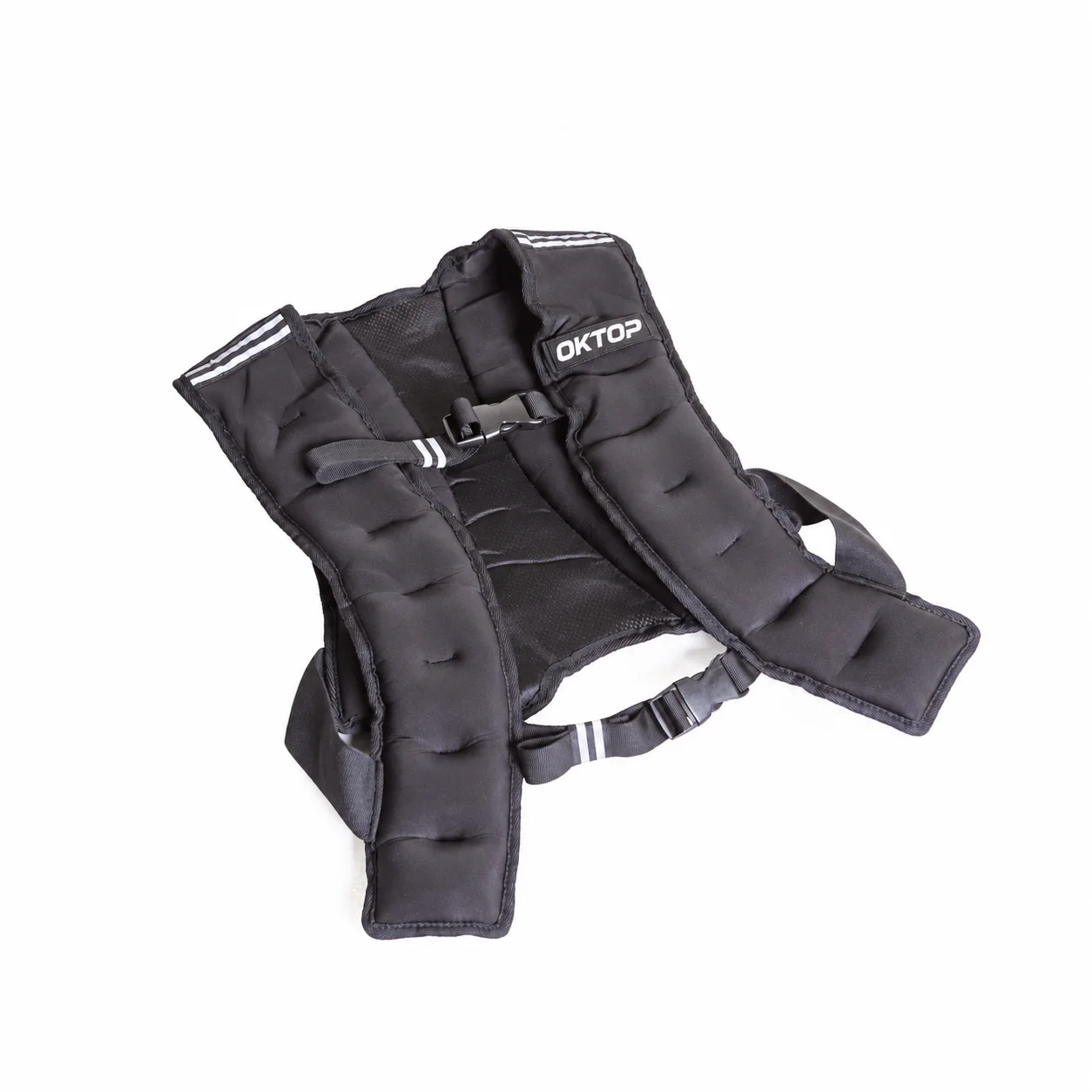
OKTOP currently lists two commercial weight-vest product designations within Training Accessories: OT6080 Weight Vest 5kg and OT6081 Weight Vests 10kg and 20kg. This guide uses those published designations as a starting point. It does not assume construction, materials, dimensions, certification, testing results or suitability beyond the product information confirmed for the relevant enquiry.
The direct answer
Choose commercial weight vests by matching the published 5 kg, 10 kg and 20 kg product designations to the facility’s planned conditioning or functional-training application. Then confirm the exact selected model, quantity, product configuration, fit information where applicable, packing and order-specific requirements with the supplier.
A commercial gym may need a small, supervised range for coached sessions. A studio may need a clear issue-and-return process for group training. A distributor may need a concise product offer that can be presented to multiple customers. These are different buying situations, even when the same product designations are being considered.
The most useful first step is to define the operating plan before requesting a quotation. Once the product application and quantity are clear, the supplier can discuss current product information and prepare a more relevant commercial response.
Start with the product application
Coached conditioning sessions
For coached conditioning sessions, a weight-vest range should support the class format rather than complicate it. The buyer should consider how many participants may use a vest at the same time, where the products will be issued, and how they will be returned between sessions. A clear return point can help coaches and staff count the selected products without searching through a mixed accessory area.
The sourcing brief should state whether the vests are intended for a dedicated conditioning zone, a functional-training floor or a studio programme. It should also identify whether the products remain under coach control or are made available in a shared training space. This context helps the supplier understand the commercial application without making assumptions about how the customer will programme individual users.
Functional-training areas
In a functional-training area, the buyer should consider the vest range alongside the existing movement space, storage plan and traffic flow. Products that are issued for a group class may need a different quantity and storage location from those used during personal-training sessions.
Before confirming an order, ask practical questions:
- How many vests may be used at the same time?
- Which listed weight designations are required for the planned programme?
- Will the products stay in one zone or move between rooms?
- Where will the products be stored before and after use?
- Who will conduct a visible condition check as part of the facility routine?
- Does the buyer need separate packing groups for different sites, rooms or training zones?
These questions help turn an accessory request into a workable operational requirement.
Distributor and project ranges
For distributors, commercial weight vests are usually one part of a broader training-accessory range. The objective may be to present defined options that a gym, studio or project buyer can understand easily. A distributor should decide which product designations form the core offer, which information needs to be confirmed before quotation, and how the products fit with related conditioning and functional-training categories.
For a project buyer, include weight vests in the same product schedule as other portable accessories. State the intended area, quantity by product designation, destination and any packaging or carton-marking requirement. This helps the receiving team allocate products to the right training zone rather than opening and mixing every accessory carton at once.
Review the published weight-vest range
The following table reflects the current public product designations. It is a product-selection reference, not a substitute for model-specific confirmation.
| Product code | Published product name | Published commercial context | Confirm before order |
|---|---|---|---|
| OT6080 | Weight Vest 5kg | Commercial conditioning and functional-training programmes | Required quantity, selected product information, packing and destination requirements |
| OT6081 | Weight Vests 10kg and 20kg | Commercial conditioning and functional-training programmes | Required designation, quantity, selected product information, packing and destination requirements |
The listed product name should be kept consistent across the product page, enquiry, quotation and packing reference. If the buyer needs a particular product arrangement, label placement, packaging format or market-specific document, it should be written into the enquiry rather than inferred from the product title.
Choose 5 kg, 10 kg and 20 kg options around the operating plan
The choice between 5 kg, 10 kg and 20 kg product designations should begin with the commercial programme, not with a claim that one designation is more suitable for every buyer. A lower listed designation may be relevant when the planned range calls for a lighter option. Higher listed designations may be relevant when the customer requirements, coaching model and selected product information support them.
Plan the range, not only the individual product
Think of the order as a range-planning exercise. Decide which designations are needed, how many units of each designation are expected, and whether the facility needs multiple matching products for simultaneous use. A distributor can use the same approach to decide which products should be available as a standard offer and which should remain enquiry-led options.
Useful questions include:
- Is the buyer seeking a focused selection or a wider progression?
- Will several users need the same designation in one class?
- Does the project involve one facility or multiple locations?
- Is the order for a commercial gym, fitness studio, distributor catalogue or project package?
- Does the buyer need a repeat-order plan after the initial purchase?
The correct answer depends on the buyer’s own product application. It should not be copied from another facility’s equipment list without reviewing how the new site will operate.
Keep the request specific
Instead of requesting “mixed weight vests,” use a product brief that identifies the product codes or descriptions, listed designations, estimated quantity, intended commercial use and destination. If the quantity is not final, label it as an estimate and explain what still needs review.
This enables more useful quotation discussions. It also reduces the risk that the buyer and supplier are discussing different product assumptions under the same broad category name.
Build a supplier-ready product brief
A clear enquiry does not need to contain every final technical detail. It should show what the buyer already knows and what needs confirmation.
| Information to share | Why it helps |
|---|---|
| Buyer type | Indicates whether the request is for a gym, studio, distributor or project buyer |
| Intended application | Connects the selected products to commercial conditioning or functional training |
| Product code and designation | Keeps OT6080 and OT6081 requirements clear |
| Estimated quantity | Supports a relevant quotation, packing discussion and product allocation plan |
| Destination market | Helps frame packing, documentation and delivery preparation questions |
| Branding or artwork request | Identifies approval steps without assuming a branding method is available |
| Packing or carton-mark needs | Helps the receiving team organise products by site or training zone |
| Sample and review request | Creates a defined point to confirm the selected model before production |
Include reference images, a product schedule or a floor plan when they help explain the customer requirements. A floor plan is useful for product allocation and storage planning, but it does not replace a product list and quantity breakdown.
Need a clearer commercial weight-vest request? Share your selected product designations, intended use, estimated quantity and destination with OKTOP. Send Your Requirements
Confirm model-specific facts before placing an order
A product title and image are useful for early selection, but they do not answer every project question. Before finalising an order, the buyer should request confirmation of the relevant details for the exact selected model.
Depending on the customer requirements, this may include:
- The exact product code and listed weight designation
- Current product configuration and the adjustment method, if relevant to the selected model
- Available fit or size information, if applicable
- Closure or fastening information for the selected product
- Material information and care guidance for the selected product
- Product labels, markings and any requested language requirement
- Packing configuration, carton marks and included items
- Available branding or private-label process, if requested
- Sample approval steps and order-linked image review
- Information needed for the destination market or the buyer’s internal approval process
This is a confirmation checklist, not a list of claims about every weight vest. If a requirement is important to the buyer, it should be written into the request and confirmed against the relevant product rather than presumed from a catalogue image.
Factory testing and shipment inspection
Factory testing should always be connected to the selected product and agreed order requirements. A buyer can ask what model-specific checks, images or records can be provided for the order. The supplier’s answer may vary by product, quantity and agreement.
For a commercial weight-vest order, shipment inspection can focus on straightforward, order-linked questions:
- Are the selected product codes and listed weight designations correct?
- Do the quantities match the purchase order or approved product schedule?
- Are the agreed product markings or logo placements visible, where applicable?
- Is the visible product presentation consistent with the approved sample or reference, where one has been agreed?
- Do packing and carton marks correspond with the packing list?
- Are any agreed included items accounted for before loading?
- Has the buyer received the agreed photo or video evidence before shipment?
The phrase “factory testing” should not be used as a broad assurance. The buyer should ask which checks are available for the selected model, what they show and how they relate to the order requirements. Product review and shipment inspection can improve communication, but they do not replace the buyer’s own destination-market assessment, receiving checks or internal acceptance process.
Delivery and installation preparation
Weight vests are portable products, so they do not usually need fixed installation in the same way as a rack or machine. They still need installation preparation in the wider project sense: receiving, allocation, storage and operational readiness.
Before dispatch, the buyer should identify who will receive the cartons, compare quantities with the packing list, move products into the intended training area and manage packaging after opening. For multi-room or multi-site projects, the buyer may ask whether cartons can be marked or grouped by destination, room or product category.
Plan the storage location before the shipment arrives. Consider whether products will be kept at a coach station, an accessory-storage area, a studio cupboard or another agreed location. The objective is to make the products easy to issue, return and review as part of the facility’s normal routine.
For a project with other Training Accessories, include the weight-vest cartons in the wider receiving plan. This can reduce unnecessary handling and makes it easier to identify whether a selected product group has been received in the right area.
Common buying mistakes to avoid
Choosing by product image alone
An image helps a buyer understand a category, but it does not confirm the selected model’s configuration, materials, fit information, packing or product-specific care guidance. Request the information relevant to the actual order.
Ordering an undefined mixed range
“Mixed quantity” is not enough for a clear commercial quotation. Identify the listed product designations, expected quantity and intended use. If some information is not final, mark it as subject to confirmation.
Leaving storage and receiving until the last stage
Portable accessories can be difficult to organise when they arrive without an allocation plan. Decide who will receive, count, store and issue the products before delivery.
Treating inspection as a last-minute request
If the buyer needs sample review, order-linked photos, carton marking or a shipment inspection process, discuss it before production or packing is complete. Early clarification makes the final review more useful.
FAQ
Which commercial weight-vest options does OKTOP currently list?
The current public range lists OT6080 Weight Vest 5kg and OT6081 Weight Vests 10kg and 20kg. These are published product designations for commercial conditioning and functional-training programmes. Exact product information, quantity and packing should be confirmed for the relevant enquiry.
How should a gym choose between 5 kg, 10 kg and 20 kg options?
Start with the intended commercial programme, expected users, coach supervision and the number of products needed at the same time. Choose the listed designations that fit that operating plan, then confirm the selected product information with the supplier.
What should a distributor include in a weight-vest enquiry?
Include the selected product codes or descriptions, listed designations, estimated quantity, target market, expected product application, branding needs if any, packing requirement and destination. This gives the supplier a clearer basis for a commercial response.
Can a buyer request product and packing information before ordering?
Yes. Share the product code, quantity, destination and required review points. The supplier can confirm available product-specific information, packing details and delivery preparation against the relevant request.
What should be checked before shipment?
Review the selected product codes, listed weight designations, quantities, agreed markings where applicable, packing-list correspondence, carton marks and any agreed image or inspection evidence.
Conclusion
Commercial weight vests should be sourced as part of a defined conditioning or functional-training plan. The buyer’s best starting point is a clear product brief: select the relevant listed designations, state the intended application, estimate the quantity, plan storage and receiving, and identify the model-specific details that require confirmation.
For the current OKTOP range, OT6080 Weight Vest 5kg and OT6081 Weight Vests 10kg and 20kg provide the published product-designation starting points. A well-structured enquiry makes it easier to confirm product information, prepare the quotation and organise the order for delivery.
Ready to discuss commercial weight vests? Review OKTOP Commercial Weight Vests, then send your weight-vest requirements with your product selection, intended use, estimated quantity and destination.