Introduction
When a buyer asks whether fixed or adjustable dumbbells are better, the answer depends on the commercial application. A busy gym floor may need several users to access different loads at the same time. A compact coaching studio may need flexibility within a smaller footprint. A distributor may need both options because its customers operate different types of facilities.
The decision should be based on user flow, intended training, storage, the adjustment process and the confirmed information for the selected model. It should not be based only on appearance or a general claim that one product format is more commercial than another.
The practical difference
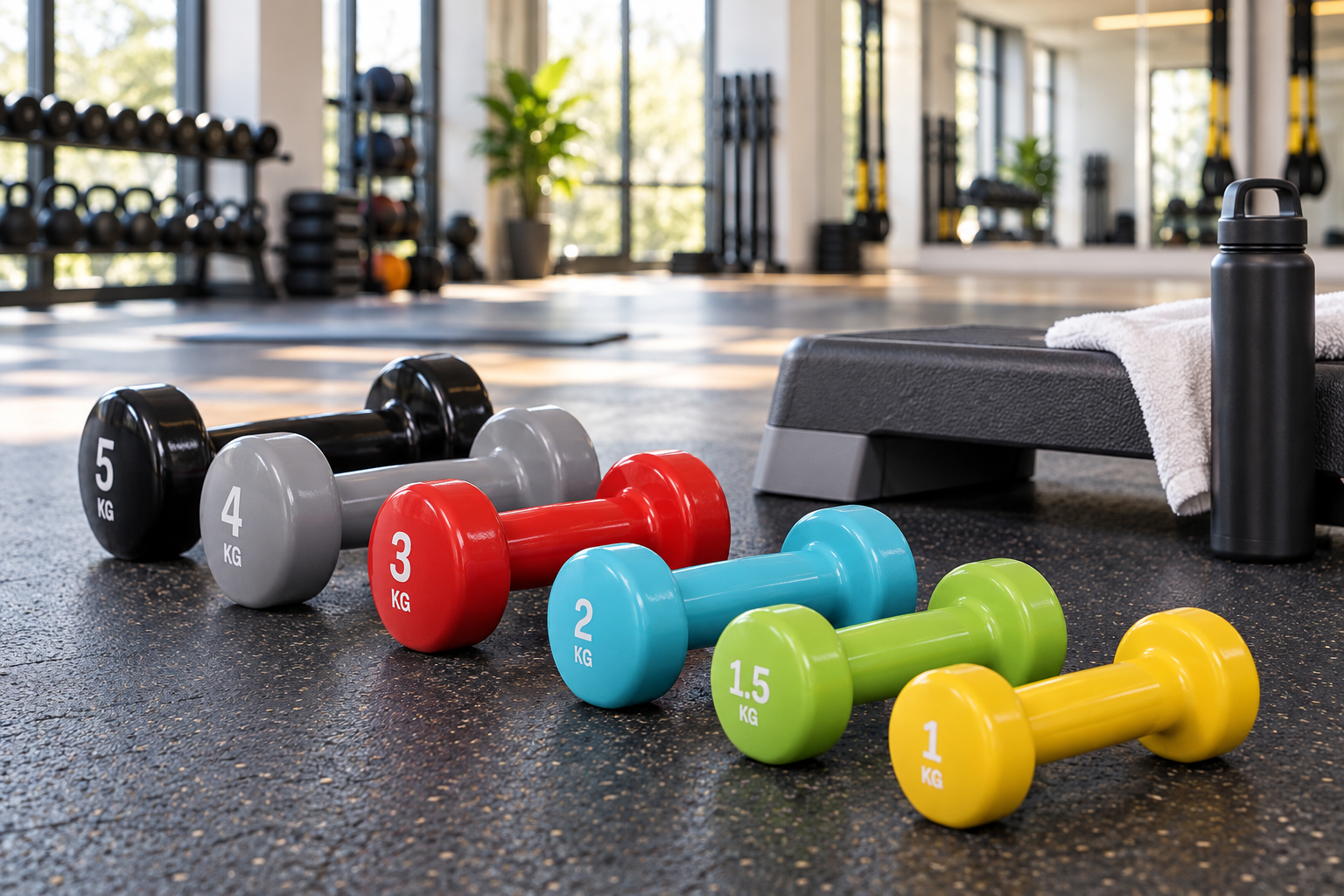
Fixed dumbbells have a permanent weight, with each pair supplied as an individual product. Users select the required pair from a rack and return it after use.
Adjustable dumbbells are designed to provide multiple load settings within one product. The adjustment method, supplied stand or tray, product dimensions and operating process depend on the actual model. Buyers should review those details before deciding whether the product suits the intended setting.
When fixed dumbbells are often appropriate
Fixed dumbbells are often useful in shared commercial environments where several users need different loads without waiting for a product to be adjusted. They may suit full-service gyms, open free weight areas, group-training settings with rapid transitions and distributor programmes serving conventional strength spaces.
The buying review should include the selected range, available increments, product marking, visible construction and finish, compatible storage and the route users will take between the rack and the bench area. The goal is not necessarily to buy the widest possible range. It is to select a range that supports the intended programme and user profile.
Storage is part of the fixed-dumbbell decision. Confirm that the rack is compatible with the selected model, gives users practical loading access and does not block benches, walkways or other active stations.
When adjustable dumbbells may be appropriate
Adjustable dumbbells may be considered for compact facilities, personal-training areas, controlled studio sessions or a distributor’s space-saving product offer. They can be useful where a buyer needs multiple load settings but has limited storage capacity.
However, an adjustable product should not be assumed to replace a full fixed range in every commercial environment. Review how the selected product is adjusted, whether a stand or tray is needed, how quickly loads can be changed and whether the intended users can operate it correctly.
Useful questions include:
- How is the selected product adjusted?
- Which load options apply to this model?
- Is a stand, tray or additional component required?
- How will the product be used during the planned sessions?
- What product-specific care or inspection information applies?
Compare the options by operating requirement
| Buying factor | Fixed dumbbells | Adjustable dumbbells |
|---|---|---|
| Simultaneous user access | Several users can select different pairs | One product may need to be shared or adjusted |
| Storage footprint | Needs compatible rack space | May reduce the number of individual pairs stored |
| Training changeover | Users select another pair | Users change the setting on the selected product |
| Typical planning use | Open commercial strength areas | Compact or controlled training settings |
| Product review | Range, marking, finish and rack compatibility | Adjustment method, instructions and intended use |
This comparison is a planning framework. Final product suitability must be confirmed for the selected model and commercial requirement.
Consider the wider training area
Dumbbells interact with benches, storage, flooring and circulation. A buyer should review the surrounding strength area as well as the product itself.
Benches need space for users to train and move. Dumbbell racks need a clear working zone. Adjustable dumbbell stands need stable placement and should not interrupt a walkway. If the products will be used in a coached environment, consider coach sightlines and the process for issuing and returning equipment.
For a distributor, product grouping can make sales discussions clearer: a core fixed dumbbell option, an alternative fixed option where appropriate, an adjustable option for selected use cases and compatible storage. This lets customers compare by application rather than by vague product claims.
Product information buyers should request
Request model-specific information before finalising a dumbbell order. Useful points include the available product options, range and increments, head and handle details, markings, compatible storage, assembly requirements, packaging information and product documentation.
If a buyer has logo, colour, packaging or documentation requirements, include them in the initial brief. Product images alone should not be treated as confirmation of a final configuration.
Mid-article CTA
Comparing dumbbell options for a commercial project or distribution range? Browse OKTOP Dumbbells and share the intended application, approximate quantity and target market.
Factory testing and shipment inspection
For either product type, agree inspection points for the actual order. Depending on the product, they may include correct product codes and quantity, visible finish, product markings, matching pairs for fixed dumbbells, adjustment operation where relevant, storage hardware count, carton labels and packing-list alignment.
If factory testing or a pre-shipment inspection is required, confirm what evidence can be provided for the selected order. A buyer may use an internal process or a third-party inspector. The key is to define the checks before shipment rather than rely on generic descriptions after the goods arrive.
FAQ
Are adjustable dumbbells suitable for commercial gyms?
They may suit compact, supervised or controlled settings. Buyers should review the adjustment method, intended use, storage arrangement and selected product documentation.
Why do many commercial gyms use fixed dumbbells?
Fixed dumbbells can make different loads available to several users at the same time. They are often practical where fast transitions and open member access are important.
Can a gym use fixed and adjustable dumbbells together?
Yes. A facility may use a core fixed range in an open gym area and adjustable dumbbells in a compact coaching area. The final mix should follow the operating plan.
Conclusion
Fixed and adjustable dumbbells solve different commercial requirements. Fixed products can support access and simultaneous use. Adjustable products may support space-efficient, controlled applications. Define the training environment first, then request product-specific information before confirming the order.
Need a clearer dumbbell product brief? Send your requirements to OKTOP with your facility type, preferred format, approximate quantity and destination market.