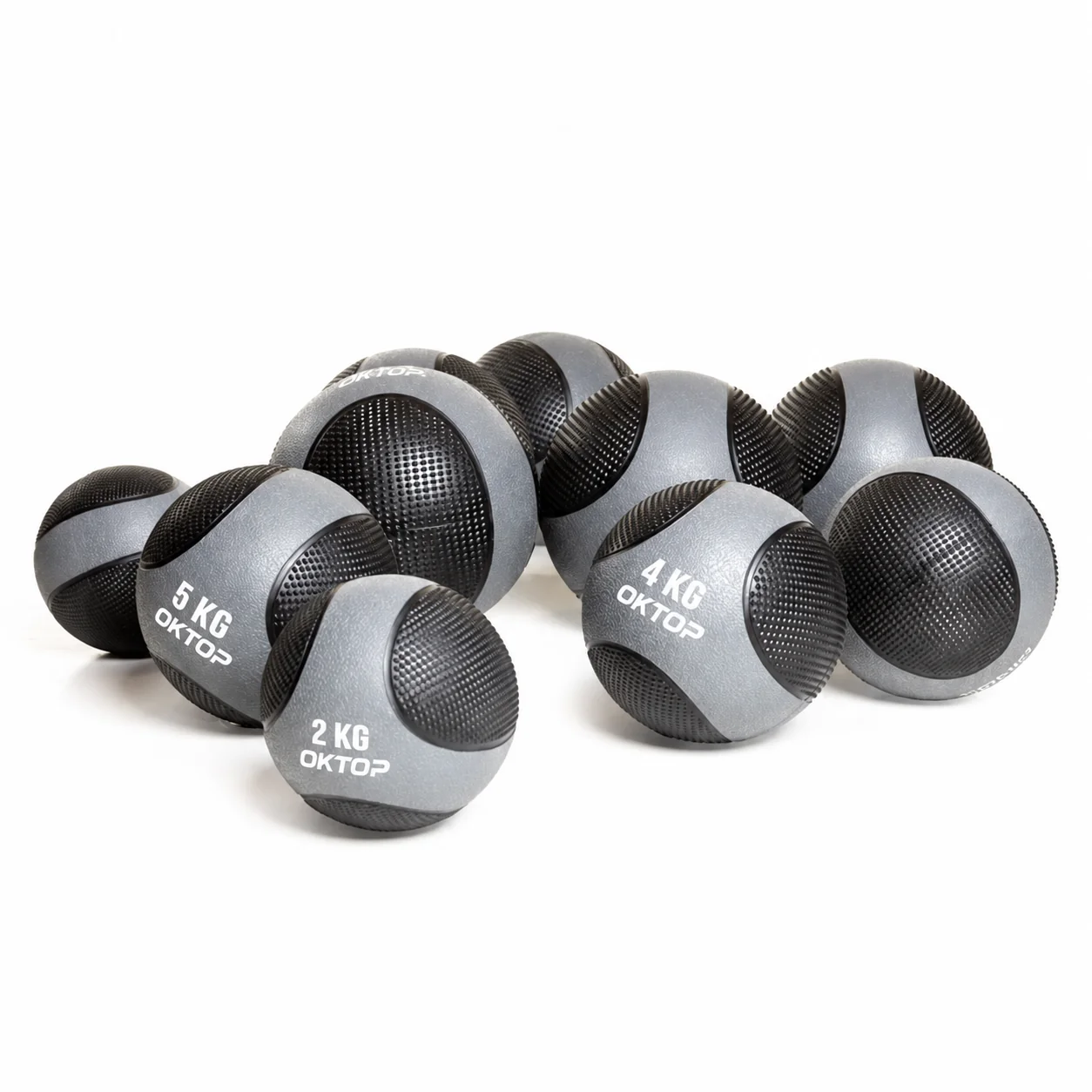
Functional balls can look like a simple accessory purchase. In a commercial gym, studio, distributor range or project quotation, they are usually part of a larger decision about programming, user flow, storage, product identification, receiving and ongoing housekeeping.
The terms medicine ball and slam ball are often used together in buyer enquiries. That does not mean the products are interchangeable. A category name or catalogue image cannot confirm the exact construction, intended use, drop conditions, material, dimensions or care requirements of a particular model. Those points should be requested and confirmed for the product that will actually be quoted and supplied.
This guide gives commercial buyers a practical way to compare the categories, create a clearer product brief and prepare for sample review, shipment inspection and delivery. It is designed for gyms, studios, distributors and project buyers. It is not exercise instruction or a substitute for product-specific guidance.
The direct answer
Choose a functional-ball category by starting with the planned programme, the selected product's documented application, the required weight range, the number of simultaneous users, the storage plan and the buyer's own acceptance requirements.
OKTOP currently lists two products in its Functional Balls category:
- OT1031 — Medicine Ball Set 1-10kg
- OT1025 — Slam Ball Set 2-40kg
Both published product descriptions place the sets in commercial functional and strength-training programmes. Before ordering, buyers should confirm the exact selected weights, quantities, product information, packing details and any project-specific conditions with the supplier.
Start with the training floor, not the product name
A functional-ball quote becomes more useful when the buyer first describes how the facility will use the category. A product title alone cannot define the programme, traffic level, coaching model or storage requirement.
Begin with a short operational brief:
- Facility type: commercial gym, fitness studio, distributor showroom or project site.
- Training context: coached sessions, personal training, a functional area, a strength area or a mixed-use space.
- Expected simultaneous users: how many people may need the product at the same time.
- Product control: whether coaches issue the products or they are available for general floor use.
- Storage: where the products will sit before, during and after a session.
- Receiving plan: who will check the cartons, quantities and selected weight designations on arrival.
These points help a buyer choose a product range that is practical to use rather than simply broad on paper. They also make it easier for a supplier to understand what information must be confirmed before a quotation is finalised.
Commercial gym use
A commercial gym may use functional balls in a dedicated functional-training area, a strength-conditioning zone or a coach-led class format. The buyer should define whether the products need to support a fixed programme, general member access or both. This affects quantity, product visibility and the process used to return items after training.
For example, a busy shared floor may need clear storage and visible weight identification so staff can reset the area. A coached session may need enough matching products for a defined class group. These are operational decisions, not assumptions that can be taken from a product photograph.
Studio and personal-training use
A studio or personal-training space may need fewer units but a more intentional product selection. The buyer may want a specified group of weights, a compact storage solution and a simple way for coaches to identify what is available.
In this setting, the question is often not "which product has the most features?" It is "which selected products fit the programme, room size and reset routine?" A clear product brief should state the training context and whether the order is intended for shared sessions, appointments or a mixed environment.
Distributor and project use
Distributors need a range that sales teams can explain without making unsupported claims. Project buyers need a range that can be allocated to rooms, zones or product schedules. In both cases, it is useful to separate core products from options that need additional product confirmation.
A distributor may ask for a commercially clear assortment with current model names, product codes, images and pack information. A project buyer may ask for cartons or packing groups that are easier to allocate at the receiving site. The final requirement should be written into the inquiry rather than assumed.
Medicine ball vs slam ball: what should a buyer compare?
The useful comparison is not a generic claim that one category is better. It is a list of questions that help the buyer confirm whether the selected product matches the planned application.
| Comparison point | Medicine Ball Set 1-10kg | Slam Ball Set 2-40kg |
|---|---|---|
| Published OKTOP product code | OT1031 | OT1025 |
| Published product designation | Medicine Ball Set 1-10kg | Slam Ball Set 2-40kg |
| Published category | Functional Balls | Functional Balls |
| Published programme context | Commercial functional and strength-training programmes | Commercial functional and strength-training programmes |
| Buyer should confirm before order | Selected weights, quantity, product information and packing details | Selected weights, quantity, product information and packing details |
The table records the published product information. It does not state unverified construction, surface, rebound, impact, dropping, material, dimensional or performance characteristics. If those characteristics matter to the planned training application, request model-specific documentation and clarification before approving a product.
Use the programme to frame the question
For an intended medicine-ball range, a buyer can describe the coaching programme, the expected weight progression and the number of products needed at one time. For an intended slam-ball range, the buyer can describe the planned exercise context and ask the supplier to confirm whether the exact selected model is appropriate for that context.
That distinction is important. The word "slam" in a product name should not replace product-specific confirmation of intended use, handling instructions or facility conditions. Similarly, the term "medicine ball" should not be used to assume an exact material, construction or movement application.
Ask for model-specific information
Before a final purchase decision, use a product-code-based request. For OT1031 or OT1025, ask the supplier to confirm the information that affects your order:
- Current product image for the selected model.
- Available weight designations and the required set composition.
- Product-specific intended-use information and care guidance.
- Product dimensions, materials or construction details if the project requires them.
- Weight markings, product labels and carton markings.
- Recommended storage and cleaning information.
- Packing configuration, carton quantity and export packing details.
- Available sample process, branding process or order documentation.
- Any destination-market, site or buyer requirements that need separate review.
This is more reliable than making a category-level assumption. It also creates a better record for purchasing, receiving and future replenishment.
Plan the weight range as an operating system
The weight range should be planned around real user demand and product flow. The published names identify a 1-10kg Medicine Ball Set and a 2-40kg Slam Ball Set. They do not, by themselves, tell a buyer how many of each selected weight a particular facility needs.
To prepare a commercial product schedule, ask the following:
How many users train at once?
This question affects the quantity of each selected weight. A coach-led group session may need multiple units of the same designation. A personal-training area may need a smaller number of products but a more deliberate progression. A distributor may need display samples and separate stock quantities.
Where will each group of products be used?
Identify the zone before requesting a final quote. A facility may assign products to a functional area, strength-conditioning area, studio or trainer station. For a multi-zone project, this can also guide carton marking and the delivery plan.
How will the range be stored and returned?
The storage location should make the selected weights easy to identify and easy to return. Buyers should consider space, visibility, cleaning access and staff workflow. If storage equipment is also needed, include that requirement in the same project discussion so the selected range and storage plan can be reviewed together.
What happens when the programme changes?
A commercial buyer may begin with an initial selection and expand later. Keeping a written record of product codes, selected weight designations, quantities and packing assumptions makes future sourcing clearer. It also reduces the risk that later orders are compared only by product image or category wording.
Product application and facility conditions
The facility can influence the right product brief as much as the product itself. A buyer should describe the actual environment rather than assume that a commercial category solves every site question.
Relevant conditions may include:
- Whether training is coached, uncoached or mixed.
- Available floor space and traffic lanes.
- Location of racks, rigs, benches, cardio equipment or other equipment that may affect the training zone.
- Storage position and the route between storage and the working area.
- Cleaning and visible-condition check routine.
- Floor, wall or target-equipment conditions when they relate to the planned application.
- Site rules, local requirements or internal buyer policies that need separate approval.
If a buyer expects an application that depends on specific product performance or site compatibility, that requirement should be written clearly. The supplier can then confirm whether the selected model's available information supports further evaluation. No product page, category title or generic industry term should be used as a substitute for this confirmation.
Sample review and factory testing
Sample review is a useful point to align the product, the quotation and the buyer's requirements. It is particularly valuable when the buyer needs to inspect a selected weight designation, product marking, general presentation, logo treatment, packaging or documentation before mass production.
The phrase "factory testing" should be used carefully. Ask what order-specific checks can be documented for the selected products. Do not assume that a factory can provide a particular test, tolerance, certificate or performance result unless it has been requested, confirmed and included in the order documentation.
A practical pre-production or sample-review checklist can include:
- Correct selected product code: OT1031 or OT1025.
- Selected weight designations and set composition.
- Product identity and visible markings.
- General presentation against approved images or samples.
- Branding or label placement if agreed.
- Product-specific care or usage documentation if supplied.
- Packing proposal and carton-mark requirements.
- Open questions that must be resolved before the order moves forward.
This approach supports a clearer purchasing process without promising outcomes that have not been verified.
Shipment inspection and delivery preparation
Shipment inspection is most useful when it reflects the actual order, not a generic catalogue range. The buyer should agree the evidence required before production is complete or before the booking and loading stage.
Depending on the selected order and agreement, a shipment inspection may review:
- Product codes and selected product names.
- Quantity by weight designation.
- Visible product markings, finish and overall consistency.
- Order-specific logo, label or packaging requirements.
- Included components or paperwork where agreed.
- Carton condition, carton marks and packing-list correspondence.
- Packing arrangement before loading.
- Agreed product and carton photos or videos.
Inspection evidence can help parties communicate about the goods being prepared for shipment. It does not replace the buyer's destination-market review, independent inspection policy, receiving inspection or site acceptance process.
Delivery preparation should also include a receiving plan. Before arrival, identify who checks cartons, where products are temporarily stored, which training area receives each group and how the team will compare quantities against the packing list. For larger projects, ask whether the packing can help distinguish functional, strength or studio allocations.
Build a clearer functional-ball inquiry
A clear inquiry helps a supplier respond with fewer assumptions. It also gives your purchasing, coaching and receiving teams a shared reference point.
| Information to provide | Why it matters |
|---|---|
| Buyer type | Frames whether the request is for a gym, studio, distributor or project. |
| Intended application | Connects the selected category to a real commercial use. |
| Product code | Keeps the request tied to OT1031, OT1025 or another confirmed model. |
| Selected weight designations | Makes the set composition clear. |
| Quantity | Supports quotation, packing and receiving planning. |
| Destination | Helps clarify delivery, carton-marking and documentation discussions. |
| Storage or zone allocation | Supports product flow after receiving. |
| Branding or documentation needs | Identifies approval steps before production. |
| Sample and inspection requirements | Makes evidence needs visible early. |
Need a functional-ball quotation built around your project? Send OKTOP your facility type, selected product code, preferred weight designations, quantities and destination. Send Your Requirements
Common buying mistakes to avoid
Choosing from an image alone
An image can help start a selection, but it does not confirm the exact model details. Link the request to a product code, ask for current product information and record the points that matter to the order.
Ordering a broad range without a storage plan
More product options do not automatically create a better training offer. If the range cannot be identified, stored and returned efficiently, it can make a training area harder to operate. Plan the range with the storage and reset routine.
Treating product names as performance guarantees
Terms such as medicine ball and slam ball are category labels. Do not infer material, impact suitability, bounce, dimensions, certification, test result or durability from a label. Confirm the requirements that matter for the selected model.
Leaving inspection until the final stage
Define the desired order checks before goods are ready to ship. This gives the buyer and supplier time to align on product identity, quantities, markings, packing and photo evidence.
FAQ
What is the difference between a medicine ball and a slam ball for a commercial gym?
They are separate product categories, but the exact distinction for a purchase decision depends on the selected model and the intended training application. Compare the published product code, weight designation, product information, care guidance and facility requirements before ordering.
Does OT1031 include every weight from 1kg to 10kg?
OT1031 is published as Medicine Ball Set 1-10kg. Confirm the current available weight designations and the required set composition with OKTOP before ordering.
Does OT1025 include every weight from 2kg to 40kg?
OT1025 is published as Slam Ball Set 2-40kg. Confirm the current available weight designations, set composition and quantity needed for your project before ordering.
Can functional balls be included in a commercial gym equipment quotation?
Yes. Include the product code, selected weight designations, quantity, intended application, storage requirement, destination and any packing or branding needs in the inquiry.
What should be checked before shipment?
Agree an order-specific checklist that can include product identity, selected weights, quantity, visible markings, packing condition, carton marks, paperwork and any agreed photos or videos.
Conclusion
Medicine balls and slam balls can both contribute to a commercial functional or strength-training range, but a strong sourcing decision needs more than a category name. Start with the training programme, then confirm the selected product code, weight composition, quantities, product-specific information, storage plan, packing and inspection requirements.
For current product options, browse Functional Balls. When you are ready, send OKTOP your product list, facility type, selected weight designations and destination through Get a Quote.