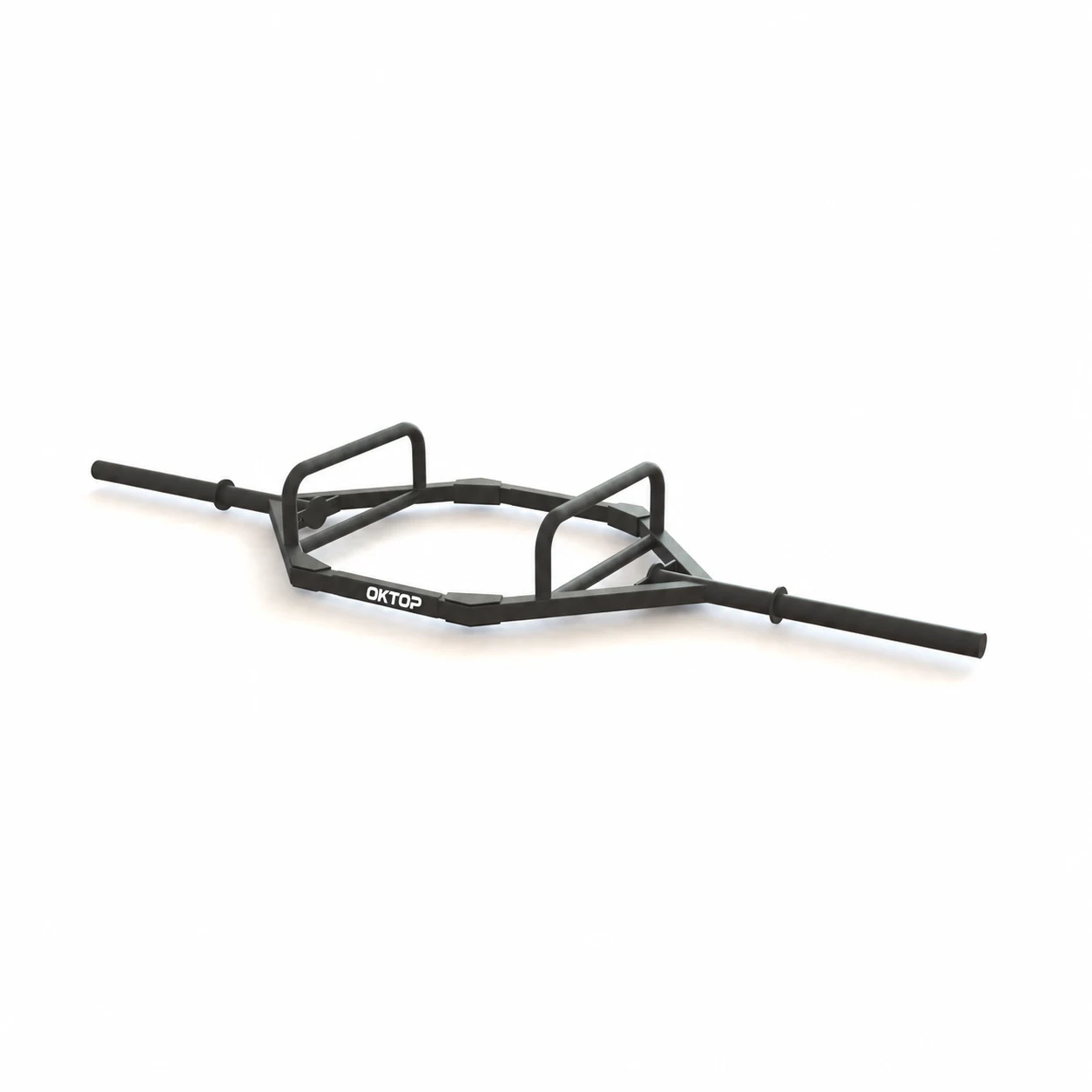
Compare two catalogue codes, not one trap-bar idea
A buyer who asks for “a trap bar” can still receive the wrong item. The barbells category lists OT1047 Olympic Trap Bar and OT1048 Open Trap Bar as separate references, both described for commercial barbells programmes and project-based sourcing. The overviews do not state sleeve length, handle spacing, knurl, finish, inside width, bar weight, plate compatibility or a user limit. Olympic appears here only as part of the OT1047 catalogue name, not as a claim about a sleeve diameter or a plate family. Each product page confirms the name and category, and asks for any material, dimension, weight, load or configuration detail the page does not state. Choose one code, or both as separate lines, before a quotation is requested.
Decide which name matches the station you are buying
The catalogue does not say when one format should replace the other. OT1047 is the Olympic Trap Bar. OT1048 is the Open Trap Bar. If both are needed, they are separate lines with separate quantities. If only one is needed, mark the other as not selected. OT1028 Hex Bar, OT1046 Multi-Grip Bar and OT1045 Farmer Carry Handles are further references in the same category. A note about one of them does not approve either trap bar. The hex-bar buyer guide covers OT1028. This page covers the choice between OT1047 and OT1048.
Build the station around the bar without hiding it inside the name
Plates, collars, storage, stands and floor area are not included by the product name. The catalogue entries ask the buyer to confirm final configuration, quantity and packing before order, and to share the intended application and destination market. Those questions apply separately to each code. For the comparison file, record:
- which code is selected, OT1047, OT1048, or both as separate lines;
- the catalogue name copied beside the code, so Olympic Trap Bar and Open Trap Bar cannot be swapped;
- any other bar code that was reviewed and rejected, including OT1028, OT1046 or OT1045;
- the commercial setting, such as a lifting platform, a coached strength area, a member floor or a distributor range;
- the approximate quantity of each selected code, and whether the bars are for one site or several;
- the destination market and any receiving or storage constraint already known; and
- the plate, collar, stand, finish and documentation questions that still need a written answer for each code.
A plate chosen for one bar is not evidence that the other bar uses the same interface. Compatibility stays open until the supplier confirms it for the quoted item.
Ask each quotation to say which trap bar it covers
Before offers are compared, ask the supplier to state the exact reference, the components included and the documents that apply. A bar alone and a bar with collars or another finish are different supply scopes. The quotation should say which scope is offered for OT1047 and which scope, if any, is offered for OT1048. A category photograph is not evidence for both items.
Ask for the current description, configuration, instructions and packing information for each selected code. If a test, a label or a destination-market document is required, name the code it applies to. Do not carry a statement about the Olympic Trap Bar across to the Open Trap Bar. Handle position, opening, sleeve detail and the space around the station have to be confirmed in writing. This guide does not assign a loading method or a user limit.
Use a sample or a document to lock the chosen name
Where a sample or a document review is appropriate, compare the reference, the visible configuration and the supplied components with the written brief for that code. Record any requested change. Approval of one bar is not approval of the other trap bar, a hex bar or a multi-grip bar.
Before shipment, agree a check for product identity, quantity, labels and packing against the confirmed order, code by code. If an independent inspection or a named document is required, agree the method and the evidence in advance. The check does not replace a local review of floor, storage or user clearance.
Keep price, packing and receiving split by code
Ask suppliers to price each confirmed reference and each quantity on its own line. Separate the bars from plates, collars, stands, labels, packing and shipping terms. An earlier quotation does not prove that the current configuration is unchanged. Switching from OT1047 to OT1048, or adding the other code later, needs a reissued confirmation. Receiving should match identity and quantity to the approved schedule while the labels are still available. A carton marked only “trap bar” is not enough when both codes were ordered.
FAQ
Which two OKTOP references does this trap-bar comparison use?
This guide compares OT1047 Olympic Trap Bar and OT1048 Open Trap Bar. They are separate catalogue items. Quote a code only when the buyer has selected it, and confirm the product information against the live enquiry before ordering.
Does the shared category description mean the two bars have the same build?
No. Both overviews place the bars in commercial barbells programmes and project-based sourcing. Sleeve, handle, finish, weight, plate interface and included components are not stated. Confirm each code in writing.
What should a trap-bar comparison enquiry include?
Include each selected code and catalogue name, the commercial setting, the approximate quantity of each code, the destination market, and the plate, collar or documentation points that still need written confirmation. List other bars on separate lines.
Choose the trap-bar code before the price conversation
A usable comparison names OT1047, OT1048, or both, and lists the points that are still open on each line.
Review OT1047 Olympic Trap Bar, review OT1048 Open Trap Bar, browse commercial barbells, read the hex-bar buyer guide, or send your trap-bar requirements.